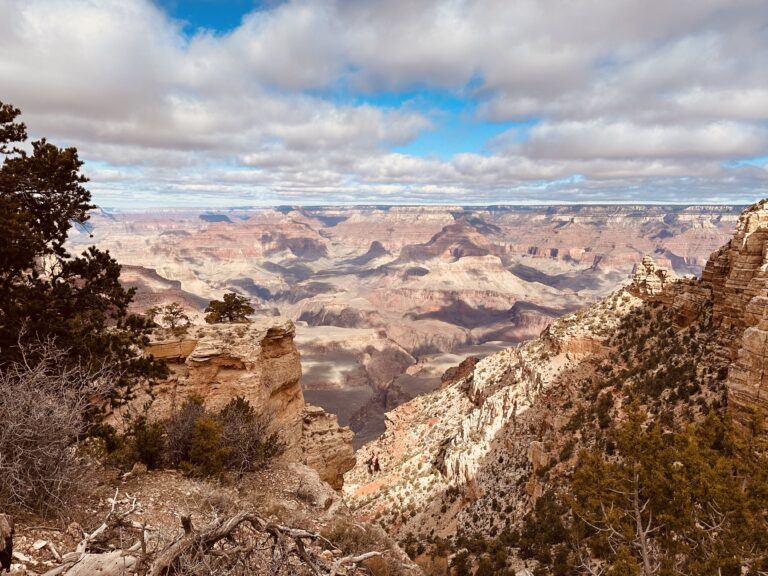
Most national parks give you one ecosystem. Olympic gives you three. On the same trip, you can stand in a rainforest draped in moss so thick it feels like a sci-fi movie, walk a wild Pacific coastline, and drive into an alpine meadow with mountain views in every direction. It’s one of the most diverse parks in the country, and a surprising amount of it is accessible without any serious hiking.
Here’s how to make the most of Olympic National Park if trails aren’t your thing.
Whale Watching Near Olympic National Park
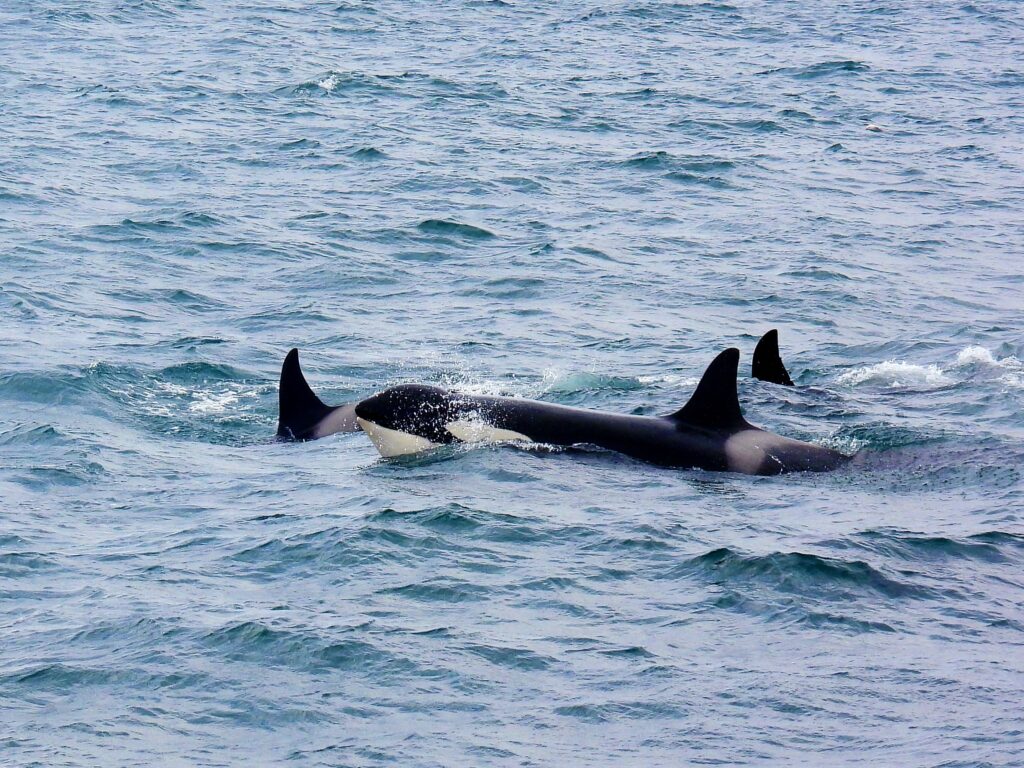
Whale watching isn’t inside the park, but Port Angeles, which is the main gateway town on the north side of Olympic National Park, is one of the best whale watching locations on the West Coast. Prime whale watching season runs May through October, with summer months offering the most reliable sightings.
Puget Sound Express runs daily half-day tours from the Port Angeles wharf from May through October. The range covers the Strait of Juan de Fuca, the San Juan Islands, and the waters off Victoria, BC, which are prime feeding grounds for humpbacks, orcas, minke whales, and gray whales. There’s an onboard naturalist, a heated cabin, and a snack bar.
If you are coming from Seattle, there are also options to depart from Port Townsend.
Lake Crescent: Swimming, Kayaking, and Scenic Views
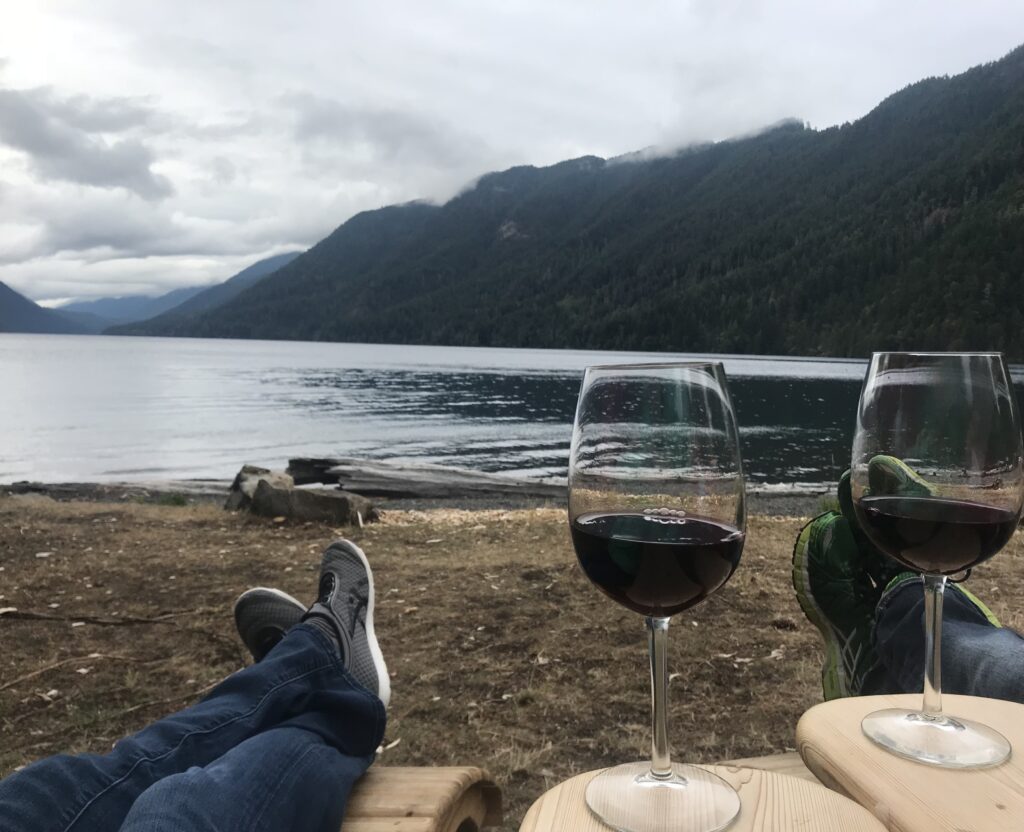
Lake Crescent is a 12-mile-long, glacially carved lake about 18 miles west of Port Angeles. The mountains come right down to the shoreline, and it’s so clear that on a calm morning, the reflections of the mountains are almost disorienting.
You can swim from the beach near Lake Crescent Lodge. The water is cold but refreshing in summer. Pro-tip: Ship inexpensive inflatable tubes and a mini compressor to your hotel from Amazon. The cold water and stunning scenery are much easier to enjoy when you are sitting on top of a tube versus having your entire body submerged.
Kayaks and paddleboards are available to rent at the lodge. Getting out on the water early, before any afternoon wind picks up, is the best way to experience the peace and solitude of the lake. Or take a Guided Kayak Tour to understand the history and geology of the lake from the water, with views of Storm King and Pyramid Peak as a backdrop.
Lake Crescent Lodge itself is worth a visit. Built in 1915, it sits right on the water and serves breakfast, lunch, and dinner. Having a meal on the waterfront here, or just sitting in one of the Adirondack chairs by the lake after a morning on the water or with a glass of wine for sunset, is an incredibly relaxing Olympic experience.
Sol Duc Hot Springs
Inside Olympic National Park, tucked into the Sol Duc Valley, is the Sol Duc Hot Springs Resort. They have a cluster of cabins in the forest with three outdoor mineral pools fed by natural hot springs, surrounded by old-growth trees. Day visitors are welcome to use the mineral pools, which are all kept at different temperatures.
It’s an incredibly relaxing way to end a day of driving and sightseeing. Towels are available to rent. The Springs Restaurant serves breakfast, lunch, and dinner using locally sourced Pacific Northwest ingredients.
Best Tide Pools in Olympic National Park
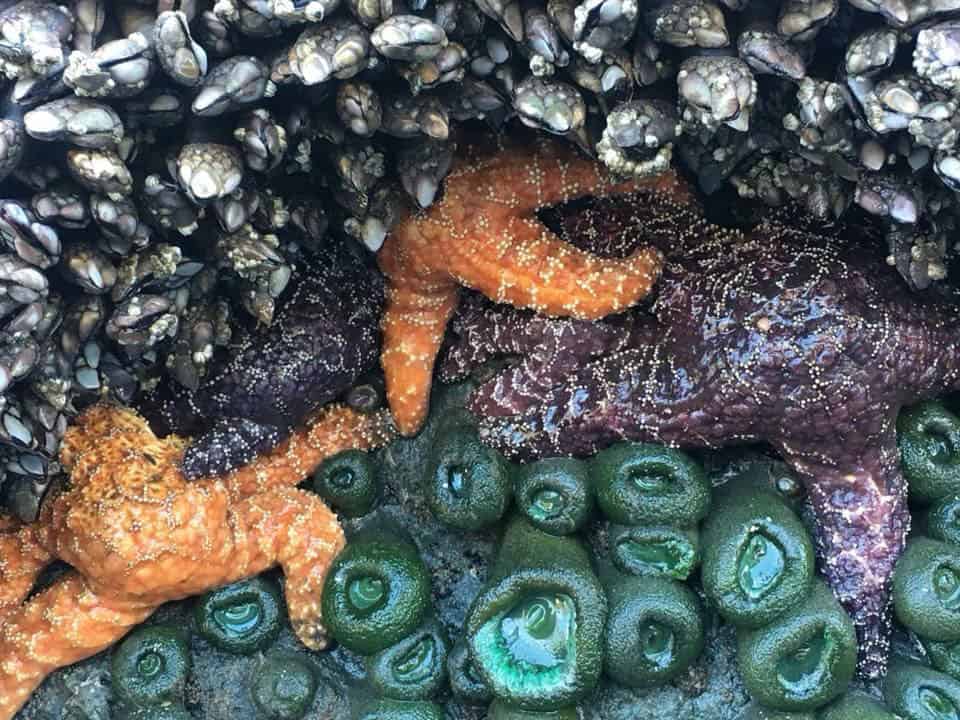
Olympic has some of the most accessible and biodiverse tide pools on the Pacific Coast, and exploring them requires nothing more than low tide and a little curiosity. Sea stars, anemones, urchins, hermit crabs, and chitons are all right there at your feet.
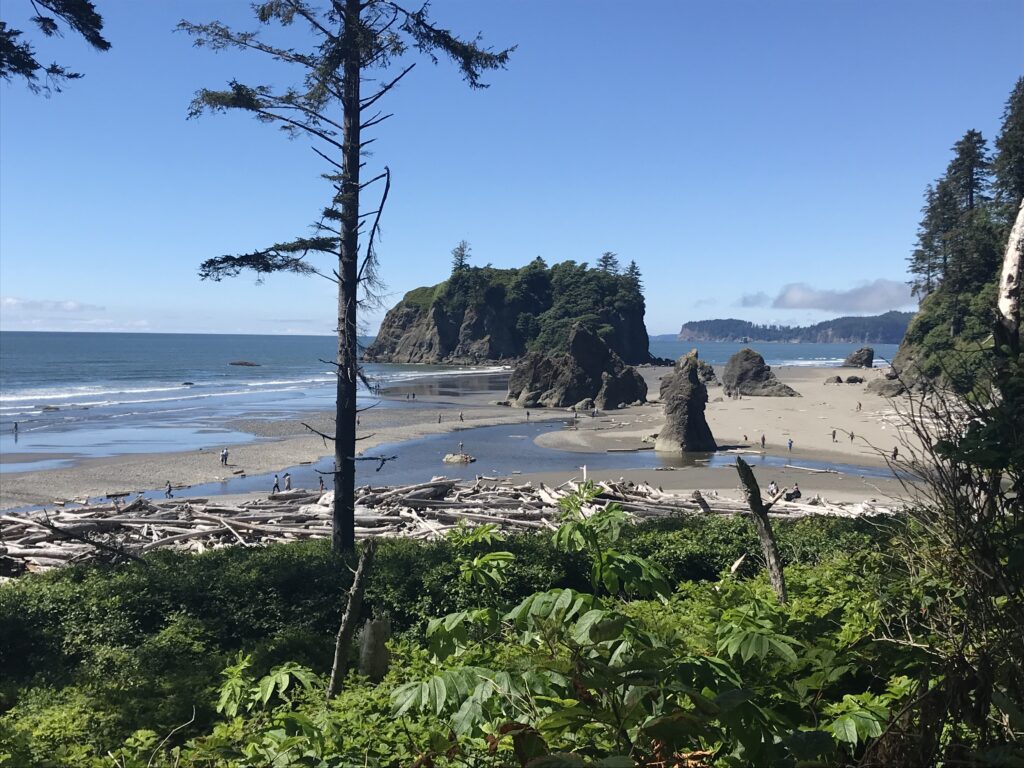
Ruby Beach is one of the best places to see the tide pools. Walk down from the parking area to a wild stretch of coastline scattered with enormous sea stacks and driftwood. At low tide, the pools around the base of the sea stacks are full of marine life.
Kalaloch Beach 4, a short drive south of Kalaloch Lodge, is another great option. The tide pools here are colorful, accessible, and reliably productive at low tide. Rangers lead guided tide pool walks here in summer, which is worth timing your visit around if you can.
Rialto Beach near La Push is another excellent option, with sea stacks, a dramatic coastline, and good pools at low tide.
Check tide tables before you go. You’ll see the most in the two hours around low tide.
Hurricane Ridge: The Easiest Mountain View in the Park
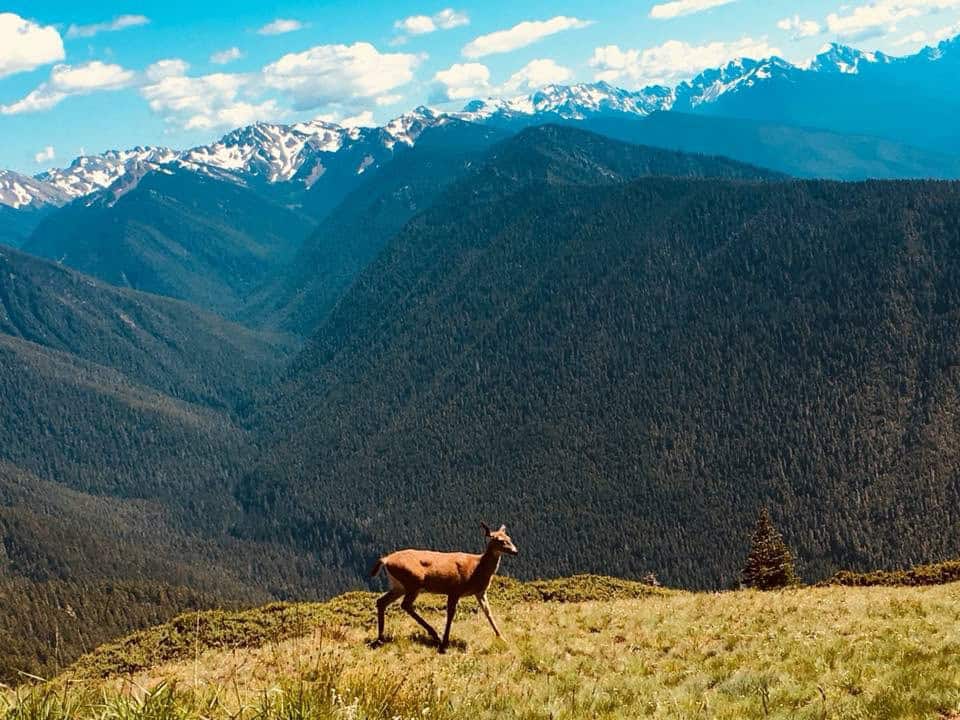
Hurricane Ridge is the most visited spot in Olympic National Park. You drive 17 miles up a paved road, and you’re standing in front of panoramic views of the Olympic Mountains and, on a clear day, the Strait of Juan de Fuca and Vancouver Island beyond. No hiking required to earn this view.
The visitor center at the top has exhibits on the park’s geology and wildlife. Deer and marmots wander through the parking area. In summer, the surrounding meadows are covered in wildflowers. If possible, go on a clear day and go early. The summit is often covered in clouds by midday, especially in summer.
Scenic Drives in Olympic National Park
Olympic is spread across nearly a million acres and doesn’t have a single road through the middle. You can access different parts of it from different directions, and the drives between them are scenic in their own right.
US-101 wraps around three sides of the park, and the stretch along the Pacific Coast between Kalaloch and Ruby Beach is a beautiful coastal drive. The late afternoon along this stretch is particularly extraordinary.
The Sol Duc Valley Road winds 12 miles through dense forest along the Sol Duc River to the hot springs resort. It’s a beautiful drive that gets better the further you go, with old-growth cedar and fir closing in on both sides and the river running alongside.
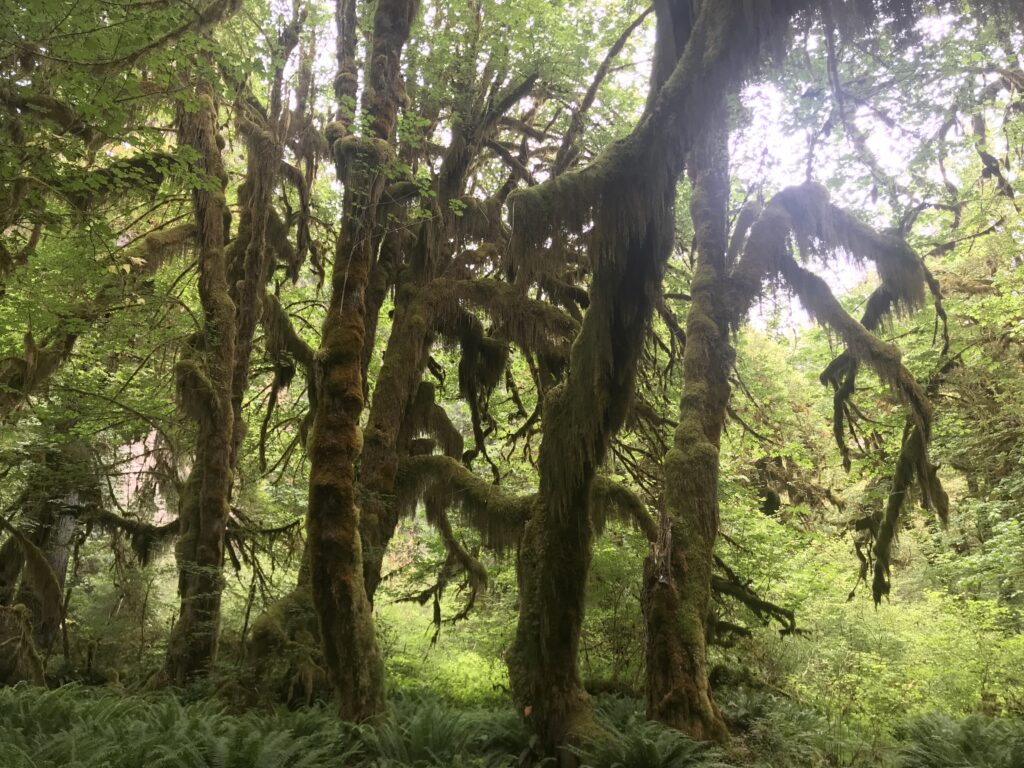
The Hoh Rain Forest Road is a 19-mile spur off 101 that ends at the Hoh Rain Forest Visitor Center. The drive itself takes you through a corridor of incredibly tall trees covered in thick moss that looks otherworldly. It’s one of the largest temperate rainforests in North America. The Hall of Mosses is a short, flat, paved path through the old-growth. It’s a casual 15-minute stroll that doesn’t require breaking a sweat, and visually surreal might be the best way to describe it.
With everything so spread out, it can be a lot of driving, so if you want someone else to handle the driving and navigation, a small group tour could be the way to go. If you want to control the amount of walking you do (or don’t do), opt for the private tour.
Quinault Rain Forest: A Less Crowded Rainforest Experience
If the Hoh Rain Forest is Olympic’s main star, the Quinault Rain Forest is the supporting actor that still deserves praise. Located in the southwest corner of the park, Quinault offers the same moss-draped trees, old-growth forest, and magical rainforest atmosphere, but with far fewer people.
The drive around Lake Quinault is beautiful, with towering spruce and cedar trees lining the road and frequent glimpses of the lake through the forest. The easy, paved Quinault Rain Forest Nature Trail is less than a mile long and winds through some of the largest trees in the park. Nearby, the historic Lake Quinault Lodge sits right on the water and is a great place to stop for lunch, a drink, or simply to enjoy the view. If you’re looking for an Olympic rainforest experience without the crowds, Quinault is absolutely worth the detour.
Best Wildlife Watching in Olympic National Park
Olympic has Roosevelt elk, the largest elk subspecies in North America, and they’re regularly spotted along roadsides, in the Hoh Rain Forest, and in the Sol Duc Valley. Black bears, bald eagles, river otters, and black-tailed deer are all common sightings from the road. Early morning and late afternoon are the best times, and the meadows around Hurricane Ridge and the river corridors along the Sol Duc and Hoh are the common places for sightings.
Olympic National Park for Non-Hikers
Olympic is a great national park for non-hikers because its most iconic experiences, the lake, the coast, the rainforest, and the mountain views, are all accessible by car, a short walk from a parking area, or from the water. You can have a great trip here without a single serious trail.
For more non-hiking national park inspiration, check out my guides to the best non-hiking experiences at Yellowstone, Grand Teton, Glacier, Acadia, and Yosemite for more ideas in this series.
FAQ: Your Questions Answered
Do I need a reservation to visit Olympic National Park?
The park entrance fee is $35 per vehicle (good for 7 days). No timed entry reservation is currently required, but parking at popular spots like Hurricane Ridge, the Hoh Rain Forest, and Ruby Beach fills up by mid-morning in summer. Always check nps.gov/olym for current conditions and any road closures before your trip.
When is the best time to visit Olympic National Park?
July and August are the driest months and best for swimming at Lake Crescent and tide pooling. That said, Olympic gets a lot of rain. It is a rainforest, and even summer mornings can be overcast. Pack a waterproof layer regardless of when you go. June and September are good shoulder months with smaller crowds. Whale watching runs from May through October.
Is Lake Crescent worth stopping at even if I’m not swimming or kayaking?
Absolutely. The lake is stunning just to look at, and Lake Crescent Lodge is a great spot for a meal or a coffee with a water view. It’s right off Highway 101 and worth at least an hour, even if you just walk the shoreline and sit for a while.
How do I time the tide pools?
Check tide tables before you plan your visit to the coast. The best tide pooling is in the two hours around low tide. A low tide below 0 feet (negative tide) exposes the richest pools. The Washington Department of Ecology publishes free tide predictions at ecology.wa.gov.
Can you visit Olympic National Park as a day trip from Seattle?
You can, but it’s a long day. The park is about 2.5–3 hours from Seattle, depending on traffic and which part you’re visiting. A guided tour from Seattle makes the most sense if you only have one day. The driving and navigation are handled for you, and a good guide will pack in more than you’d manage on your own. If you have more time, spending at least 2–3 nights on the peninsula gives you a much more relaxed experience.
What is the best base for Olympic National Park?
Port Angeles is the most practical base for the north side of the park, convenient for Hurricane Ridge, Lake Crescent, Sol Duc, and whale watching. For the coast and rainforest, Forks or Kalaloch Lodge puts you closer to Ruby Beach, the Hoh Rain Forest, and the Pacific coastline. A split stay — a couple of nights in each area is the best way to cover the park without spending your whole trip in the car. Or stay in the park at Lake Crescent Lodge.
Can you see Olympic National Park without hiking?
Yes. Hurricane Ridge, Lake Crescent, the Hoh Rain Forest (via the Hall of Mosses), the tide pools at Ruby Beach and Kalaloch, and the Sol Duc Hot Springs are all accessible without serious trails. Olympic is one of the more non-hiker-friendly parks in the system.
What are the best things to do in Olympic National Park without hiking?
Olympic is one of the best national parks for non-hikers. Popular activities include whale watching from Port Angeles, kayaking on Lake Crescent, driving to Hurricane Ridge, exploring tide pools at Ruby Beach, visiting Sol Duc Hot Springs, and wildlife watching throughout the park.
How many days do you need in Olympic National Park?
Three to four days is ideal. Olympic is spread across nearly one million acres, and driving between the mountains, rainforest, lakes, and coastline takes longer than many people expect.
What is the most scenic drive in Olympic National Park?
The drive to Hurricane Ridge offers the most dramatic mountain views, while the coastal section of Highway 101 between Kalaloch and Ruby Beach is one of the most scenic coastal drives in Washington.
Let’s Plan Your Trip
Want help building an Olympic itinerary that’s right for you without spending hours and hours researching the logistics? I can do that!
Vacation planning just got easier!
Set up a free consultation or tell us about your trip to get a quote.
This post contains affiliate links to Viator tours. If you book through these links, I may earn a small commission at no extra cost to you. I only recommend tours I would book myself or recommend to clients.
Looking for more national parks you can enjoy without extensive hiking? Check out my guides to The Best Things to Do in Yellowstone National Park Beyond Hiking, The Best Things to Do in Glacier National Park Beyond Hiking, The Best Things to Do in Grand Teton National Park Beyond Hiking, The Best Things to Do in Acadia Beyond Hiking, and The Best Things to Do in Yosemite Beyond Hiking.
Looking for more national parks you can enjoy without extensive hiking? Check out my guides to The Best Things to Do in Yellowstone National Park Beyond Hiking, The Best Things to Do in Glacier National Park Beyond Hiking, The Best Things to Do in Grand Teton National Park Beyond Hiking, The Best Things to Do in Yosemite Beyond Hiking, and The Best Things to Do in Acadia Beyond Hiking.