The Grand Canyon is an amazing, iconic sight. But finding the best time to visit the Grand Canyon can be tough, especially if you are juggling school and work schedules.
Summer is often the easiest time for families go, but by 10:00 AM in July, it can be 95 degrees. That’s a recipe for sweating, whining kids, and frustrated parents. And despite the heat, you’ll still be fighting crowds to enjoy the view.
But, is March too cold? Will there still be ice and snow at the Grand Canyon? As a travel planner, I have learned that the “best time” isn’t just about weather. It is about what you want to do.
If you are a hiker, you want spring (think April or even March) or October. For families with school-age kids, spring break is ideal, but I can help make June doable, too. If you want to save money, you want January.
This isn’t a generic weather report. This is the truth about when to visit the Grand Canyon, specifically for families who want their kids to enjoy this amazing wonder without the stress.
The Short Answer: The “Cheat Sheet”
If you are in a rush and just want the quick facts, here is my “Cheat Sheet” for 2026.
- Absolute Best Overall Time: late April or mid-October. (Great weather, fewer people).
- Best Time for Good Weather: May and September. (Sunny, warm, but very busy).
- Best Time to Avoid Crowds: January and February. (Cold, but empty).
- Best Time for Families: Spring Break, early June, or late August. (Summer is hot, but fits school schedules).
- Best Time to Save Money: November through February. (Hotel rates drop significantly).
- Worst Time (In My Opinion): The week of July 4th. (Too hot, too crowded, expensive).
Pro Tip: No matter when you visit, the South Rim (the main part) is open 365 days a year. The North Rim (the quiet part) is closed from mid-October to mid-May because of snow.
Want help picking the perfect time for you?
Set up a free call with a national park expert for personalized recommendations and planning tips!
The “Goldilocks” Season: Spring and Fall
(The Pros and Cons of the most popular months)
Most blogs will tell you that the “shoulder season” of Spring (March-May) and Fall (September-November) is perfect. While I would agree with this, there are a few things to keep in mind.
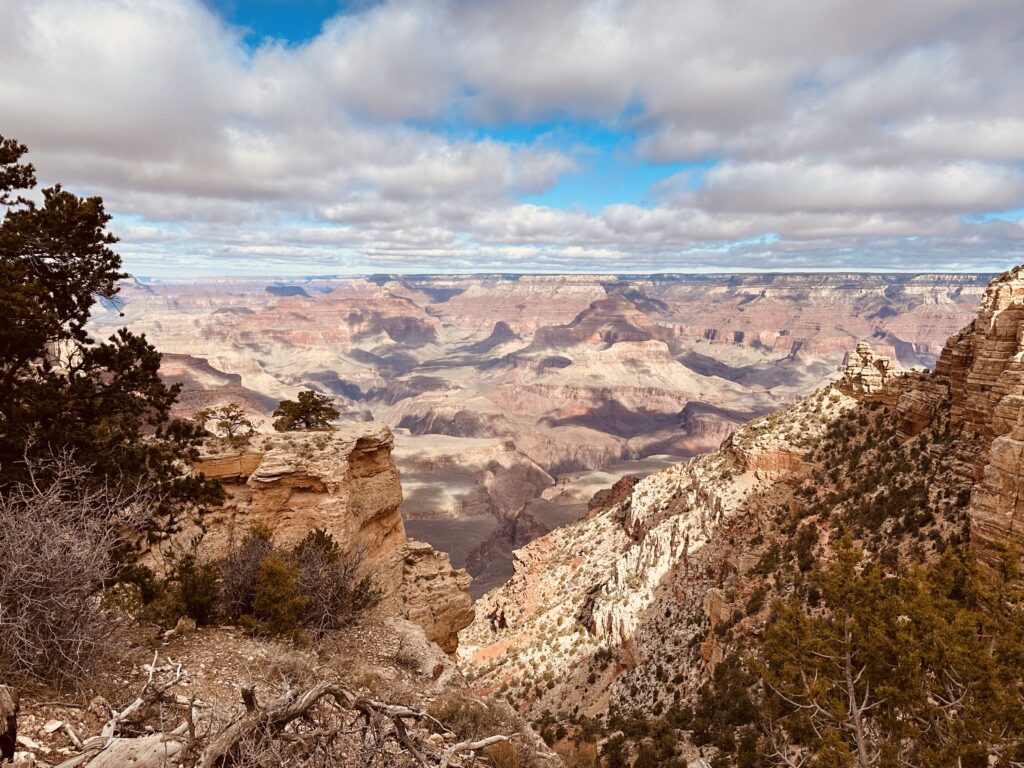
While the altitude of the Grand Canyon is 2,000 – 2,500 feet at the Colorado River, it’s over 7,000 at the South Rim and 8,000 at the North Rim. That means the Rim, where you will likely spend most of your time, is significantly colder than the bottom. It can easily be a 20-degree temperature difference from the Rim to the bottom. Trust me, I hiked all the way to the bottom in the Spring. It was chilly at the top and got progressively warmer and warmer.
Spring (March, April, May)
By May, highs are in the 70s (F). It feels perfect for walking the Rim Trail. But, in the desert, spring doesn’t necessarily mean “flowers and sunshine.” It means “wind and layers.”
The “Gotchas”:
- The Wind: Spring can be “hold onto your hat” windy. If you are scared of heights, standing on the edge during a 40 mph gust isn’t fun.
- The Ice: In March and early April, the trails can still be icy. If you plan to walk down into the canyon (even a little bit), you need to have the right footwear and be careful.
- Spring Break: In March and April, crowds surge because of school breaks. It can be busier than summer.
Fall (September, October, November)
Personally, I would recommend mid-October as the ideal time to go.
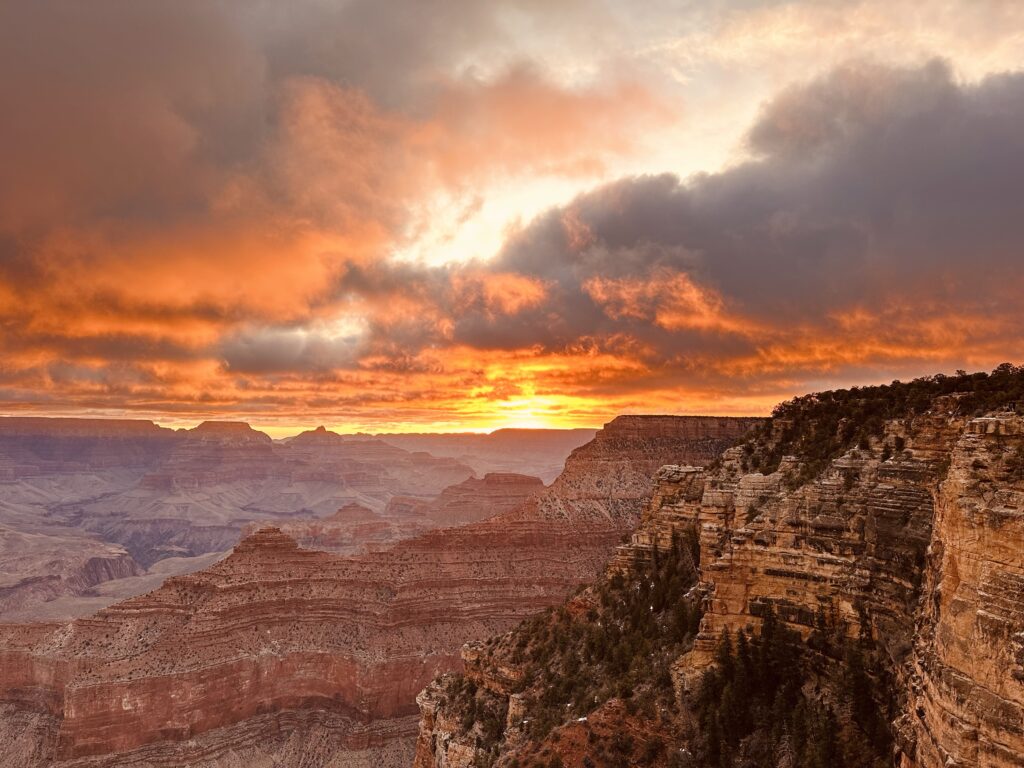
- Stable Weather: The wind dies down. The monsoon rains (more on that later) are gone.
- Cooler Nights: You might need a jacket for dinner, but the days are sunny and mild.
- Changing Leaves: Yes, there are trees in the desert! The Aspen trees on the North Rim turn bright yellow. It is stunning against the red rocks.
The Trade-off:
- Shorter Days: The sun sets earlier (around 6:00 PM). This gives you less time to explore.
- North Rim Closing: If you go too late in October, the North Rim might already be closed for winter.
The Summer Reality: June, July, August
(How to survive the heat and the crowds)
Let’s be real. If you have kids in school, summer and spring break are probably your best options. That’s why 40% of all visitors come in summer despite the heat. You can still have an amazing trip, but you need a strategy.
The Heat is No Joke
When you look at a weather forecast, you are likely looking at the temperature at the Rim. Remember the elevation. At the top (the Rim), it might be 85 degrees, which is hot but doable.
But if you hike down into the canyon, the temperature rises. For every 1,000 feet you go down, it gets about 5 degrees hotter. At the bottom (Phantom Ranch), it can be 115 degrees in July.
My Summer Rules for Families:
- The “10 to 4” Rule: Try not hike between 10:00 AM and 4:00 PM. It can be dangerous. Do the scenic drives and casual walks to overlooks, the indoor activities like IMAX, and book a hotel with a pool.
- Early Bird Wins: Arrive at the gate by 7:00 AM. You will beat the line, get a parking spot, and see the best light.
- Hydrate: Drink more water than you think you need.
The Monsoon Season (The Surprise Storms)
From July to mid-September, Arizona has a “Monsoon Season.”
This doesn’t mean it rains all day. It usually means a clear morning, and then—BOOM—at 2:00 PM, a massive thunderstorm rolls in. It pours rain, lightning strikes, and then 30 minutes later, it’s sunny again.
Insider Secret: Don’t hide in your hotel! After the storm clears, the canyon is often filled with dramatic clouds and sometimes rainbows. It is the best time for photography. Just stay inside your car or the lodge during the lightning.
The Secret Season: Winter (December, January, February)
(Why it could be the best-kept secret if you don’t mind the cold)
Yes, it snows. But the South Rim stays open. And seeing the red rocks dusted with white snow is a completely different experience than any other season.
Why You Should Consider Winter:
- No Crowds: You can stand at Mather Point all by yourself and enjoy peace and quiet.
- You Can Drive: In summer, you have to take the shuttle bus to see the best views (Hermit Road). In winter (December-February), they open the road to private cars. You can drive yourself and stop wherever you want.
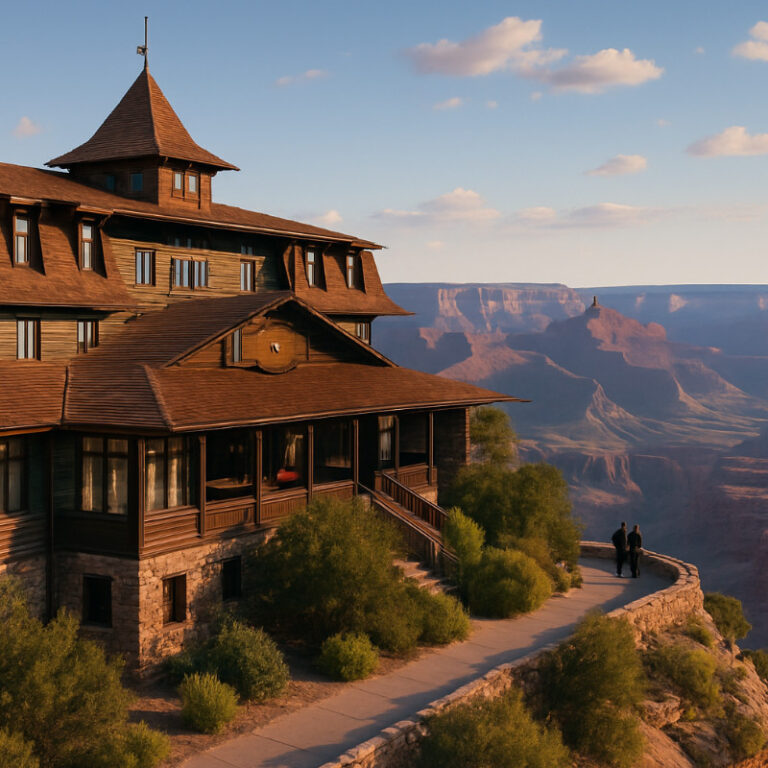
- Cheap Hotels: The fancy hotels inside the park (like El Tovar) that cost $400+ in summer might be $250 in January.
The Risk: Fog. Sometimes, a winter storm blows in, and the whole canyon fills with fog. All you see is a wall of white. Plan for more than one day, and you should be ok.
North Rim vs. South Rim: Two Different Worlds
(Do not make the “Wrong Rim” mistake)
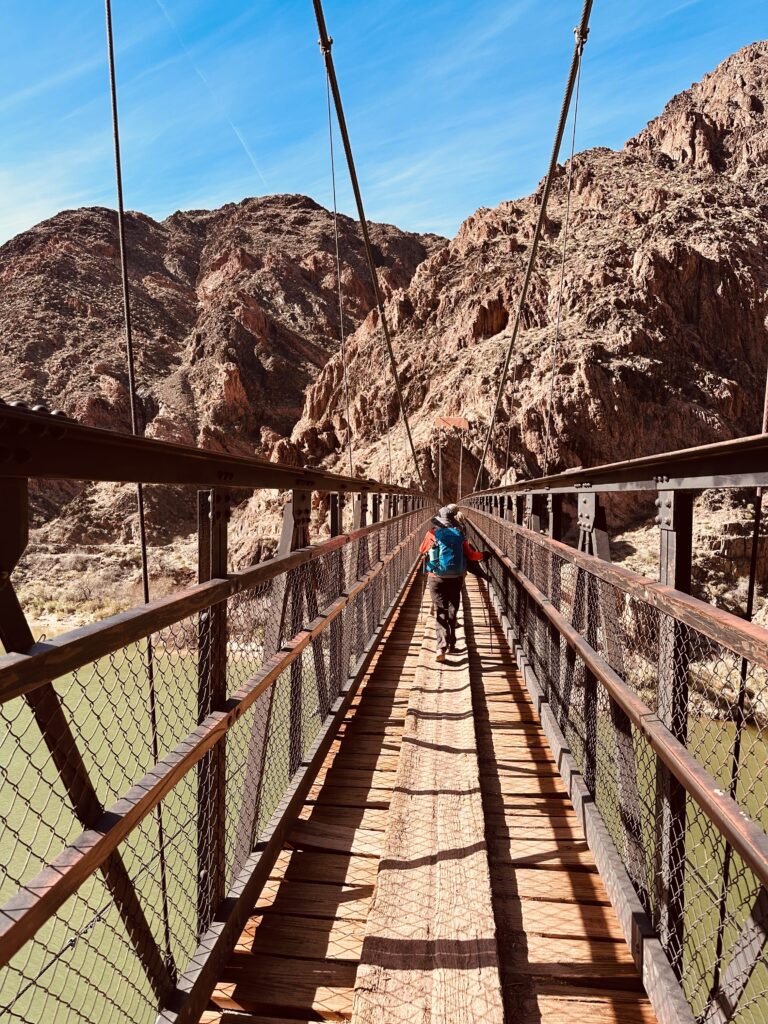
The Grand Canyon has two sides. They are only 10 miles apart as the bird flies, but to drive from one to the other takes 4 hours. You cannot just “pop over” to the other side for lunch. Make sure you know which Rim your hotel is on! Hint: Grand Tusayan and Williams, AZ are on the South Rim and Jacob Lake, AZ is on the North Rim.
The South Rim (The Popular One)
- Open: 365 days a year.
- Vibe: Lots of hotels, restaurants, shuttle buses, museums, and family-friendly activities.
- Best For: First-time visitors, families with young kids, and people who want convenience.
- The Crowd Truth: It is busy. In peak season, there will be lines.
The North Rim (The Quiet One)
- Open: Mid-May to mid-October ONLY. (It gets too much snow in winter).
- Vibe: A cabin in the woods. It is 1,000 feet higher than the South Rim, so it has a more rustic forest feel than the desert. It’s also cooler temperature-wise.
- Best For: Second-time visitors, couples, introverts, and people who hate crowds.
- The Catch: There is only one lodge (Grand Canyon Lodge). If you don’t book it far enough advance, the closest gateway town is an hour away.
My Advice: If this is your very first trip, stick to the South Rim. It has the iconic views you see in movies. Save the North Rim for your next trip when you want to escape the world.
Best Time to Visit by “Traveler Type”
(Because one size does not fit all)
There’s not really one generic answer for the best time to visit the Grand Canyon. A 25-year-old backpacker needs a different trip than a family with a stroller.
1. For Families with Toddlers (School Schedule Doesn’t Matter)
Winner: Late April or Early May.
- Why: You aren’t tied to the school calendar yet! Take advantage of this freedom.
- The Benefit: The weather is mild (no heat tantrums), and the crowds haven’t peaked yet.
- The Strategy: Stay at the Yavapai Lodge. It’s not right on the rim (so you don’t have to worry about your toddler falling off every 2 seconds), but it has a cafeteria and is close to the shuttle.
2. For Families with School-Age Kids
Winner: First week of June.
- Why: Most schools let out in late May, so get there before the peak summer season.
- The Benefit: It is hot, but not “July Hot” yet. The monsoon rains haven’t started.
- The Strategy: Book a hotel in Tusayan with a pool to deal with the heat.
3. For Couples, Empty Nesters, Hikers, and Non-Hikers
Winner: October.
- Why: The ice and the heat are gone, so you can avoid slippery trails and heat exhaustion. It’s great weather.
- The Benefit: The shuttle buses are less packed, so you are more likely to get a seat.
- The Strategy: Plan a “drive-through” trip. Drive Desert View Drive towards the Watchtower. It is a scenic route with parking lots right at the viewpoints and very little walking required.
4. For Budget Travelers
Winner: January or February.
- Why: Hotel prices inside and outside the park drop significantly.
- The Benefit: You can stay at the historic El Tovar hotel for the price of a standard motel.
- The Strategy: Pack some serious layers. It can be 20 degrees at night.
The “Monsoon” Factor
(What the brochures don’t tell you)
As I mentioned earlier, from July to mid-September, there’s a daily risk of significant afternoon storms. You need to factor this very possibility into your plans.
The Mistake People Make: They plan a 2:00 PM helicopter tour or a mule ride in July. The Reality: Those tours often get cancelled because of lightning.
My “Monsoon Strategy”:
- Morning: Do your “must-do” outdoor activities (hiking, mule rides) before 11:00 AM. The sky is usually clear.
- Afternoon: Plan indoor activities. Visit the Kolb Studio museum, have a long lunch at the El Tovar dining room, or watch the IMAX movie in Tusayan.
- Evening: Head back to the rim for sunset. The storms usually clear up by 6:00 PM, leaving dramatic clouds that turn purple and orange. It is spectacular.
Crowd Evasion 101: How to Find Solitude
(Even in July)
You can visit in the busiest week of the year and still find quiet spots if you know where to look. Most visitors are “car tourists,” meaning they drive to the viewpoint, take a photo, and leave.
Here is how to outsmart them:
- Skip Mather Point at Sunrise: Everyone goes to Mather Point because it is near the Visitor Center.
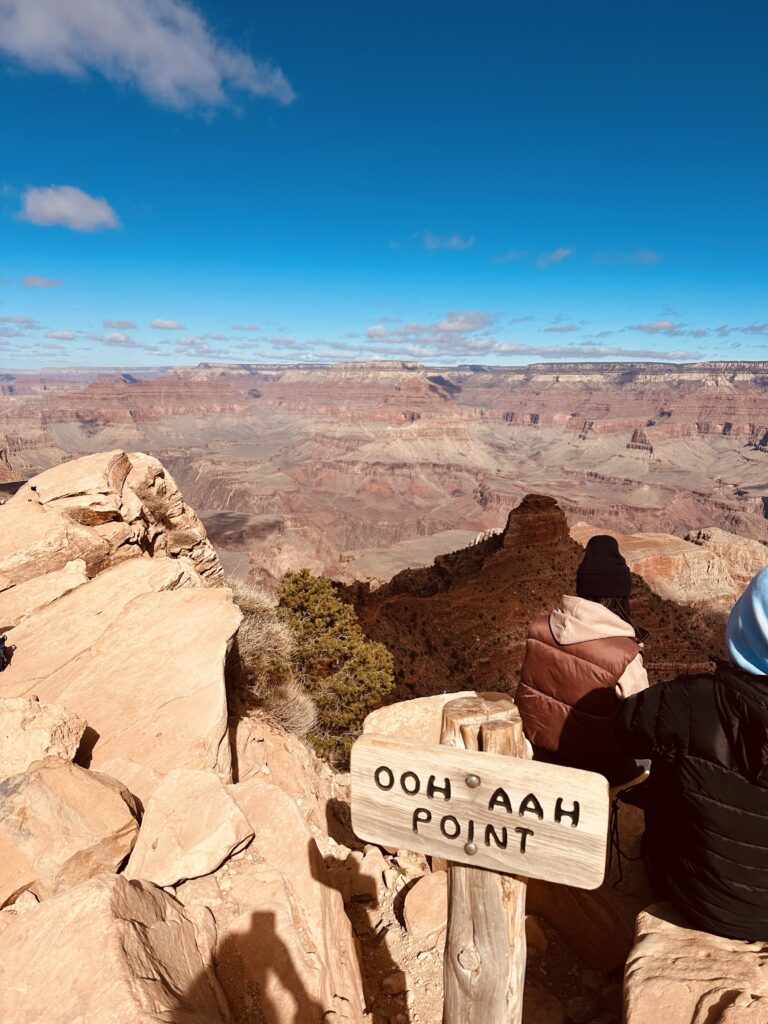
- Go to Yaki Point instead: You have to take the shuttle (orange route) to get there, which filters out 50% of the lazy people. The view is just as good, and it is much quieter.
- Walk 10 Minutes: This is the golden rule. At any viewpoint, just walk 10 minutes down the Rim Trail away from the parking lot and the crowds seriously thin out. Most people won’t walk more than 500 feet from their car.
Month-by-Month Breakdown
(The “Good, Bad, and Ugly” at a Glance)
Ok, the Grand Canyon is never really ugly, but it can be hot and crowded. Here’s the month-to-month breakdown.
| Month | Weather | Crowds | Cost | My Verdict |
| January | Cold / Snow | Very Low | $ | Best for budget & silence. (Pack a parka). |
| February | Cold / Snow | Very Low | $ | Risky. Storms are common, but it’s beautiful. |
| March | Cool / Windy | High | $$ | Busy. Spring Breakers arrive. Trails are icy. |
| April | Mild / Nice | Medium | $$ | Great Balance. Go late in the month for best weather. |
| May | Perfect | High | $$$ | Near Perfect. Everything is open. Book early. |
| June | Hot / Dry | Massive | $$$ | Family Peak. Go early in the month to beat the worst heat. |
| July | Very Hot | Massive | $$$ | Intense. Monsoons start. Plan around them. |
| August | Hot / Stormy | Massive | $$$ | Dramatic. Great for photos, bad for hiking at noon. |
| September | Warm | High | $$$ | The “Second Summer.” Crowds stay high until the 15th. |
| October | Crisp / Perfect | Medium | $$ | My Favorite. Perfect hiking weather. North Rim closes mid-month. |
| November | Chilly | Low | $$ | Underrated. Bring a jacket. Great visibility. |
| December | Cold | Medium | $$ | Festive. Busy around Christmas, quiet otherwise. |
Frequently Asked Questions
1. How many days do I need at the Grand Canyon?
For the South Rim, I would recommend 3 days.
- Day 1: Arrive, see the Visitor Center, and watch the sunset at Mather Point.
- Day 2: Do a big activity (hike into the canyon a little bit, or take a shuttle tour to Hermit’s Rest).
- Day 3: Do something fun (Helicopter tour, Jeep tour, or bike ride) and depart.
2. Is the Skywalk worth it?
Honest answer? It depends. The Skywalk is not at the main National Park. It is at “Grand Canyon West” (on tribal land), which is a 4-hour drive from the South Rim. I don’t think it’s worth 8 hours of driving, but if you are coming from Las Vegas, it’s somewhat on your way. If you have time for an extra stop, it’s a cool experience, but it’s not a “must-do” if it doesn’t fit in your itinerary. You’ll have plenty of amazing views from the South Rim.
3. Do I need a reservation to enter?
No, the Grand Canyon does not require a “timed entry” reservation just to drive in. However, you do need a park pass ($35 per car), and lines at the gate can be long if you arrive at 10:00 AM in peak season.
Don’t Miss this Epic Trip
The Grand Canyon is an epic, must-see-it-once-in-your-lifetime kind of trip. But, you do have to navigate weather patterns, crowds, shuttle schedules, and hotel booking windows. It takes a lot of time to figure it all out and map out the right plan for you.
Or, you could let me handle it.
I save busy families hours and hours of research time by doing all the flight, hotel, park shuttle, and activity research for you. I recommend what fits your family (not a generic “the perfect 3-days at the Grand Canyon” blog) with a detailed day-by-day plan based on what you like to do.
Let’s plan your trip
Set up a free consultation or tell us about your trip to get a quote.