The Grand Canyon is iconic for a reason. Only 1% of the approximately 4 million people who visit the Grand Canyon every year hike to the bottom, so if you just want to view it from an overlook, you are far from the only one.
Just peering over the South Rim to look out over 277 miles of canyon carved a mile deep into the Colorado Plateau is an experience that everyone should have at least once in their lifetime.
For non-hikers, there is a remarkable amount to do here beyond the trails, from mule rides to jeep tours to a really solid IMAX film. And if you pair it with a couple of days in Sedona, you’ve got a great Southwest road trip, even for foodies.
Here’s how to make the most of the Grand Canyon and Sedona without lacing up a single hiking boot.
Pink Jeep Tours in Grand Canyon National Park
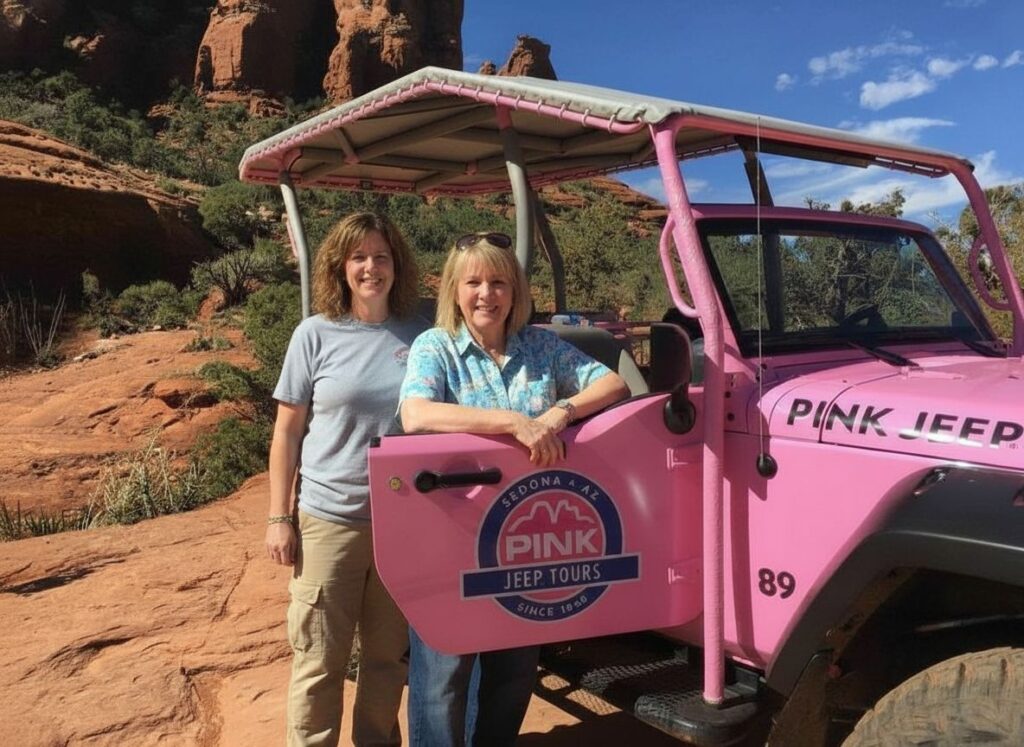
Pink Jeep Tours has been running adventures in the Southwest since 1960, and they are synonymous with the Grand Canyon experience for good reason. Their guides are knowledgeable, entertaining, and genuinely love this place, and the open-air Jeep Wranglers get you to viewpoints and terrain that a regular vehicle or a hiking trail simply can’t access.
You’ll hit the South Rim’s most expansive viewpoints while your guide covers the canyon’s geology, history, and wildlife. There are morning, afternoon, or sunset departures, and which you choose can really depend on the season. Morning is a good bet to avoid the afternoon heat in summer or afternoon thunderstorms in spring.
Another Pink Jeep option is the Desert View Grand Canyon Jeep Tour, which includes an IMAX and takes you along the East Rim Drive to the Desert View Watchtower, which is a 70-foot stone tower that you can climb for 360-degree views. Both tours can sell out, so book ahead.
Grand Canyon Mule Rides: The Classic Canyon Experience
This is the classic Grand Canyon experience and one that has been going on since the late 1800s. There are two options on the South Rim. The Canyon Vistas Rim Ride is a two-hour ride that stays on the rim, traveling through the Kaibab Forest with views of the canyon along the way. It’s great for families or anyone who wants the mule experience without the commitment of going below the rim.
The other option is the full Phantom Ranch Overnight Ride, a 5.5-hour descent down the Bright Angel Trail to the canyon floor, an overnight stay at the legendary Phantom Ranch, a steak dinner served family-style in the canteen, and a return trip up the South Kaibab Trail the next morning. It is an experience, but there are a lot of logistics involved.
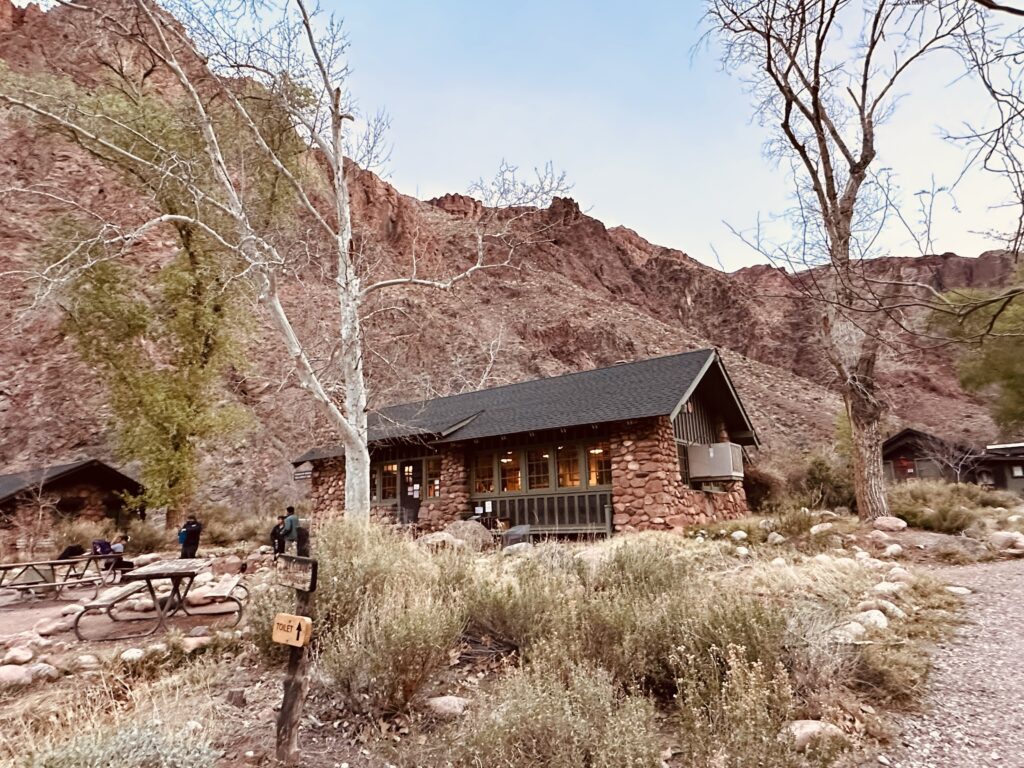
The Phantom Ranch is the only accommodation option on the Canyon floor (besides camping with your own tent). You need to secure your own reservation, and they are very tough to get. Reservations are by lottery only (and to be honest, your chances aren’t great – you should plan to apply every month for a while if you really want to go). Apply through grandcanyonlodges.com and check frequently for cancellations.
The Canyon Vistas Rim Ride is easier to get, but still requires booking about a year in advance.
Breakfast or Lunch at El Tovar
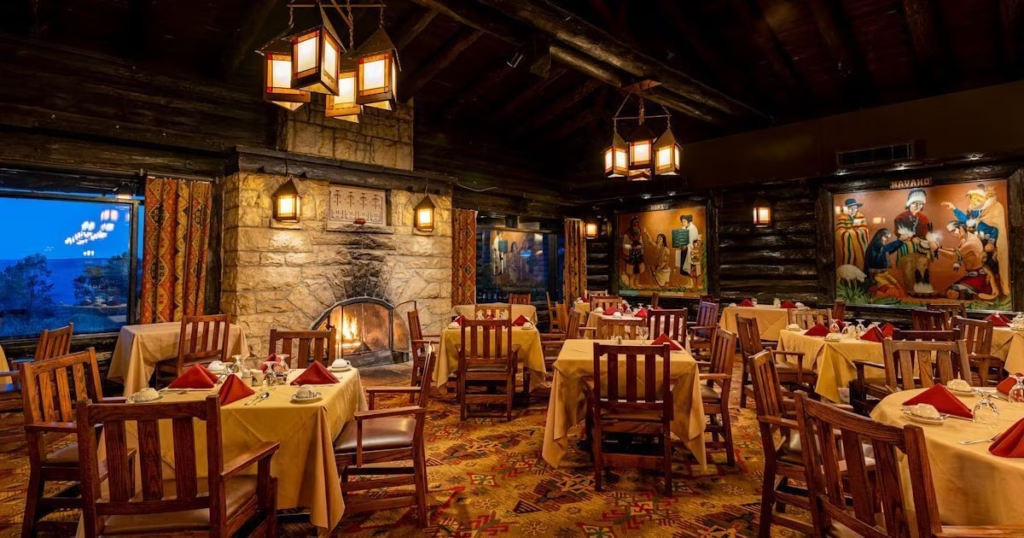
El Tovar Hotel has been sitting on the edge of the South Rim since 1905, and it is still the most legendary place to eat in the entire park. Built by the Fred Harvey Company and originally designed to rival the great European mountain lodges, it is a historic lodge with log and stone on the outside, dark polished wood, and elk antler chandeliers inside. It’s close enough to the rim that you can walk out the front door and be standing at the canyon’s edge in about 30 seconds.
The El Tovar Dining Room serves breakfast, lunch, and dinner. Dinner and lunch require a reservation, and non-guests can only book 30 days out (El Tovar hotel guests get 6 months). Lunch reservations are typically easier to get. Breakfast is more accessible and a great way to experience the dining room without the reservation scramble. Get a window table if you can, sit in one of the rocking chairs on the covered porch after your meal, and soak up the rim view.
There’s also the El Tovar Lounge. A cozy bar with a side entrance facing the rim, serving drinks and light meals. A quiet afternoon drink on the rim, without the dining room formality, is a great way to experience this historic building.
Scenic Drives, Shuttle Routes, and Grand Canyon Viewpoints
Parking at the Grand Canyon in summer can be a headache, and there are some lookout points that don’t allow private vehicles at all. The good news is parking is relatively easy at the Visitor Centers, and the free color-coded shuttle system is a great way to get to all the lookout points without hiking or driving.
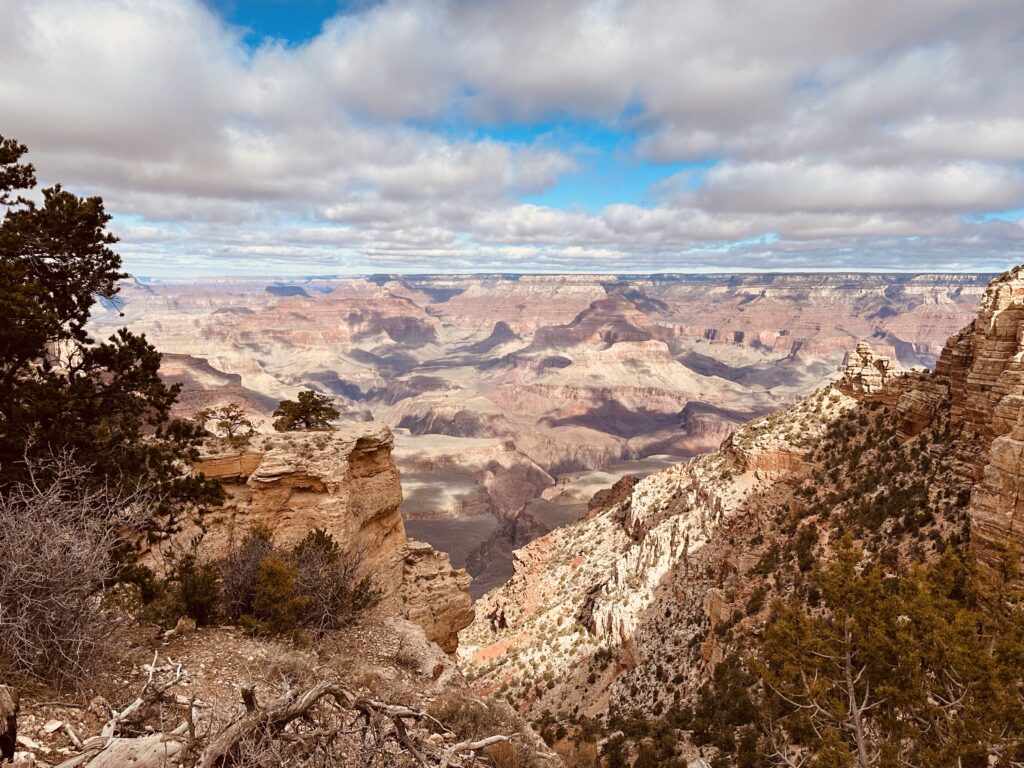
The Blue Route connects the Visitor Center to Grand Canyon Village and the historic district where El Tovar, Bright Angel Lodge, and Kolb Studio are located. The Red Route (Hermit Road) runs west along the rim to Hermits Rest, stopping at a string of spectacular viewpoints, including Trailview, Maricopa Point, Powell Point, Hopi Point, Mohave Point, and Pima Point. These are all closed to private vehicles for much of the year. Hopi Point is consistently voted the best sunset viewpoint on the South Rim and is worth timing your afternoon around.
The shuttles run every 15–30 minutes, depending on the route and season. In summer, they run from before sunrise to after sunset. Grab a route map at the Visitor Center and spend a day hopping on and off. It’s a completely stress-free way to cover a lot of the canyon without walking more than you want to.
The IMAX Theater in Tusayan
Tusayan is very close to the South Entrance of the Grand Canyon and is worth a stop, even if you are staying inside the park. The Grand Canyon Visitor Center in Tusayan is home to the National Geographic IMAX Theater, one of the first IMAX theaters ever built when it opened in the mid-1980s. The “Grand Canyon: Rivers of Time” covers the geology, history, and ecology of the canyon with aerial footage that gives you a sense of the canyon’s scale that you simply cannot get from standing on the rim. It’s been updated with IMAX with Laser projection and 12-channel sound. It will give you a new appreciation for what you are seeing in the park.
The Junior Ranger Program
If you’re visiting with kids, the Junior Ranger program is one of the National Park Service’s great gifts to traveling families. Kids pick up a free Junior Ranger booklet at any visitor center, complete age-appropriate activities throughout the day, including learning about geology, wildlife, canyon history, and Leave No Trace principles. You can return to a visitor center, and your kids can be sworn in as official Junior Rangers by a park ranger and receive a badge.
The activities are engaging and educational without feeling like homework. Most kids love the swearing-in ceremony. The Grand Canyon version of the program is particularly well done as the canyon’s geology and natural history can be fascinating to kids when presented the right way.
The Yavapai Geology Museum, the Kolb Studio, and the main Visitor Center are all great spots for completing activities.
Helicopter Tours in Grand Canyon National Park
If you want to understand the sheer scale of the Grand Canyon in a way that no rim viewpoint can convey, a helicopter tour is the answer. Flying out over the rim and dropping down into the canyon, watching the walls rise around you, puts the whole thing in a different perspective. It’s expensive, but it’s a bucket-list experience.
The helicopter tours do sell out regularly and have strict weight requirements and weather-dependent cancellation policies. Early morning flights tend to have the smoothest air and the best light.
Grand Canyon West and the Skywalk
If you’re wondering why I haven’t mentioned the Skywalk as a great non-hiking activity, that’s because it’s on the West Rim, which is a 4-hour drive from the South Rim.
The South Rim is what I would always recommend. It’s where the most expansive views are, and there are more amenities. It’s the most popular rim for a reason. If you are flying into Phoenix, the West Rim likely doesn’t make sense.
That said, if you’re coming from Las Vegas, Grand Canyon West could make a lot of sense as a quick day trip on a side-trip on your way to the South Rim. It’s about a two-hour drive from the Strip, compared to roughly four and a half hours to the South Rim.
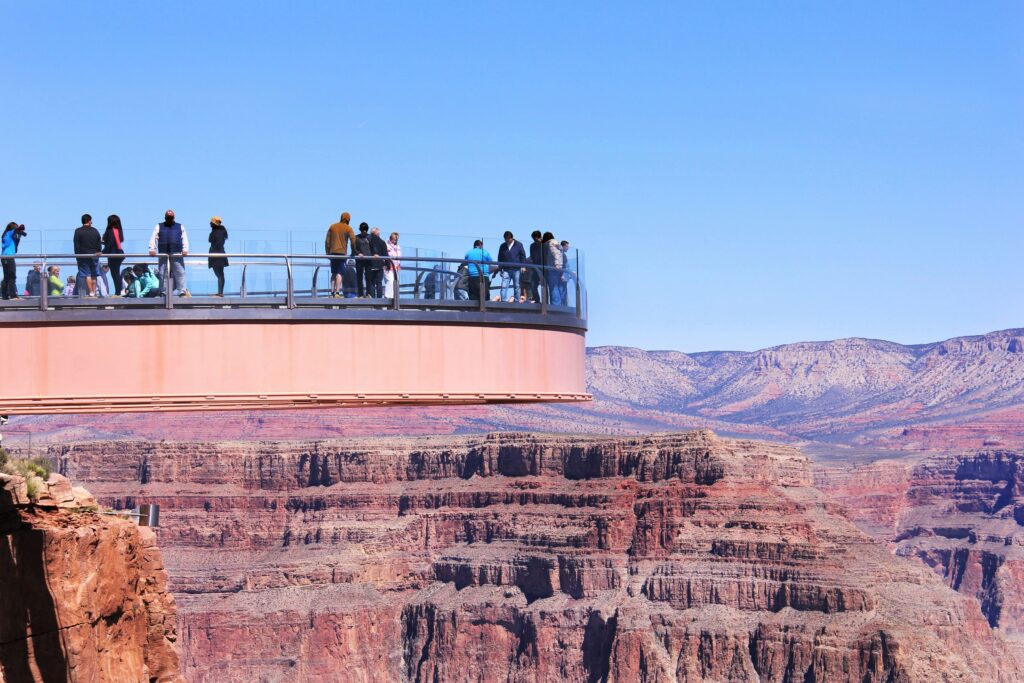
The biggest attraction on the West Rim is the Skywalk, a horseshoe-shaped glass bridge that extends 70 feet beyond the canyon rim. Standing on the glass floor and looking straight down into the canyon is definitely a unique experience. Some people love and others consider a bit touristy, but it’s memorable.
The West Rim also offers several scenic viewpoints, cultural demonstrations from the Hualapai Tribe, and opportunities for helicopter and pontoon boat tours that descend into the canyon.
Best Family-Friendly Activities at the Grand Canyon
The Grand Canyon works surprisingly well for families, even if your kids aren’t interested in hiking for miles. Some of the best experiences are accessible right from the rim, and there are plenty of ways to keep kids engaged beyond simply looking at the view.
From riding the free shuttle to becoming a Junior Ranger, taking a Pink Jeep Tour, or experiencing the canyon from the air, there are activities for a wide range of ages and interests. The Grand Canyon has the perfect balance of nature and adventure. Pro-Tip: If you are traveling with kids, consider staying in Tusayan rather than in the park. None of the Grand Canyon hotels have pools. Many in Tusayan do.
Grand Canyon and Sedona: The Perfect Arizona Road Trip
If you’re flying into Phoenix, which many people do, driving north to the Grand Canyon takes you right past Sedona. Sedona is about 2 hours south of the South Rim and 2 hours north of Phoenix. Spending two days at the Grand Canyon and two days in Sedona gives you a great Arizona road trip that covers two iconic red rock landscapes. And if you are a foodie, Sedona more than makes up for what the Grand Canyon dining options quite frankly lack.
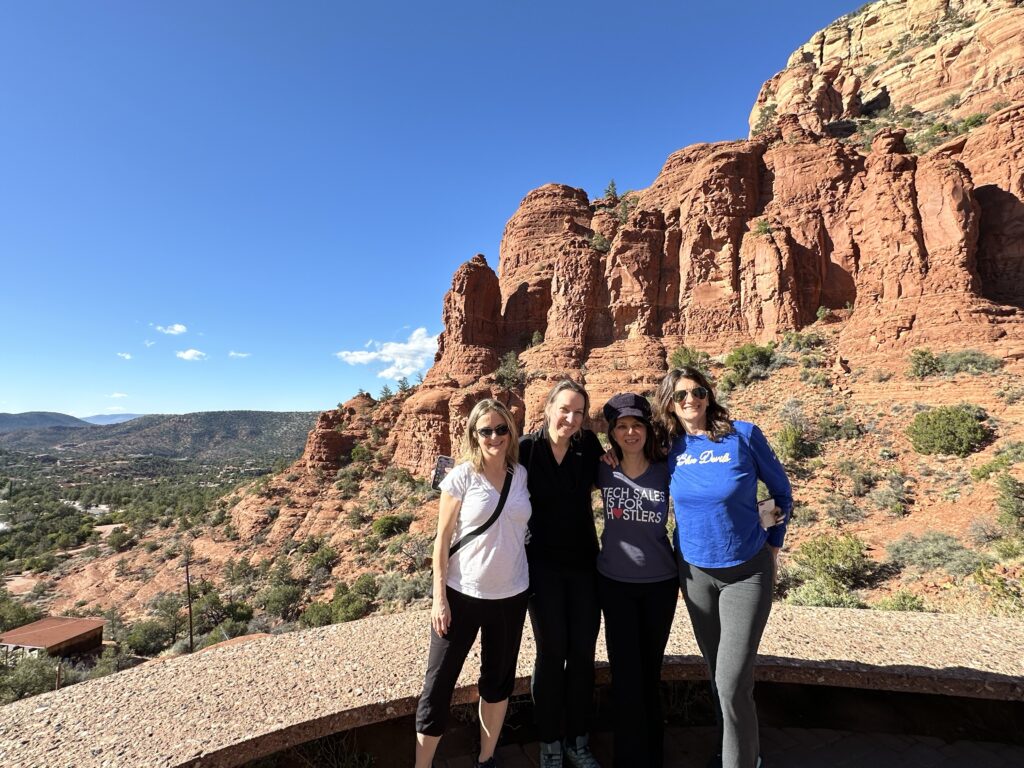
Sedona’s red rock formations are a different kind of spectacular from the Grand Canyon. Where the canyon is about depth and scale, Sedona is full of towering red buttes and mesas with formations like Cathedral Rock, Bell Rock, and Courthouse Butte. And a charming town at the center of it all.
Pink Jeep Tours in Sedona
Pink Jeep Tours started in Sedona in 1960 before expanding to the Grand Canyon, and the Sedona operation is still the heart of what they do. The tours here take you off-road through Coconino National Forest, through red rock canyons, and to viewpoints that you can’t reach on your own.
The tours range from gentle to adventurous, giving you an option that works for everyone. Yes, adventurous means it feels more like a roller coaster at times than a jeep ride, but that’s why there is a range of options. Tours sell out, especially in spring and fall, which are Sedona’s peak seasons. Go in the morning when it’s cooler, and the light on the red rocks is at its best.
Chapel of the Holy Cross
The Chapel of the Holy Cross is a must-see, and it’s not hiking. It’s a short drive from Uptown Sedona and involves a brief paved walk up to the entrance. The chapel was built in 1956, set directly into a pair of red rock formations, and Architectural Digest ranks it among the most beautiful churches in the world. Even if you’re not religious, the architecture and the views are stunning.
Uptown Sedona and Tlaquepaque
Uptown Sedona along Route 89A is the center of the town’s shopping and dining scene. Most of the shops sell turquoise and silver jewelry, local art, crystals, and Southwestern crafts, a step up from typical souvenir shops. The Tlaquepaque Arts & Crafts Village is a beautifully designed Mexican-style marketplace a short drive from Uptown, with dozens of galleries, artisan shops, and restaurants set around open courtyards and fountains.
Sedona has plenty of casual and fine dining options as well as spas and luxury wellness retreats. Eating on a patio for open-air dining with sweeping red rock views is common.
Grand Canyon for Non-Hikers
The Grand Canyon is actually one of the most non-hiker-friendly parks in the country. The rim viewpoints are all accessible by car or shuttle, the mule rides are legendary, and the guided jeep tours cover terrain most hikers never reach. You don’t have to go down into the canyon to feel its scale — though if you do go down on a mule, you’ll never forget it.
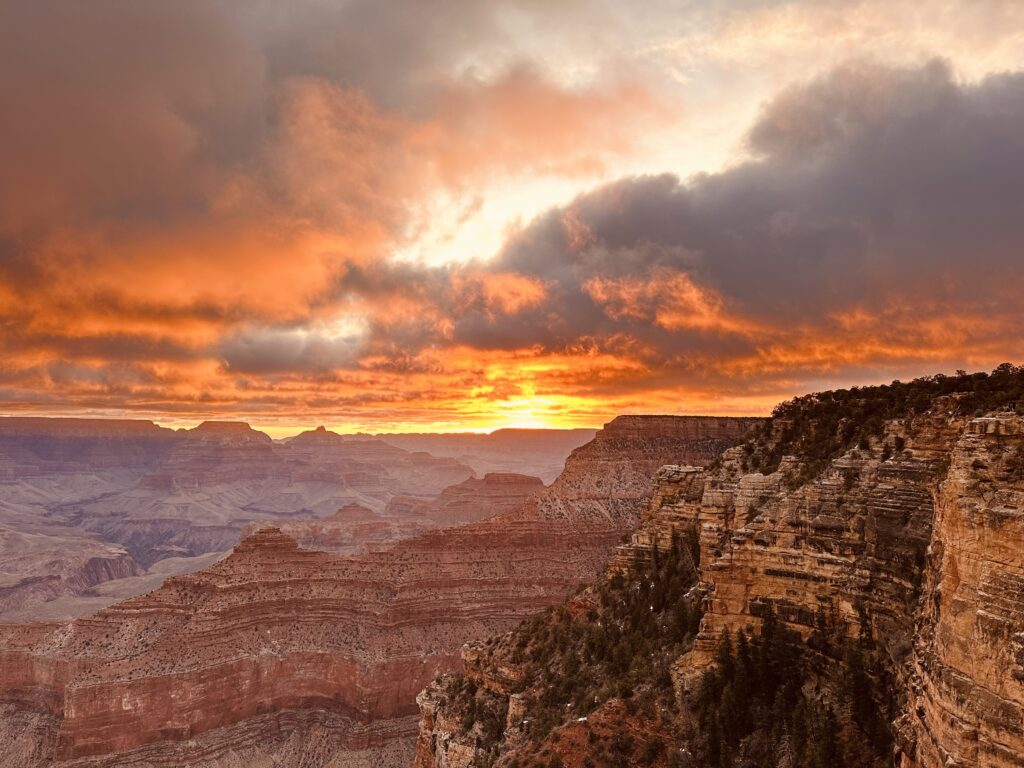
Don’t leave without standing at the rim at sunrise. You don’t have to hike to do this. Walk out from El Tovar or any of the rim viewpoints before the sun comes up and watch the canyon walls shift through shades of purple, pink, orange, and gold as the light changes. It’s one of those experiences that no photograph quite captures, and it’s free.
For more non-hiking national park inspiration, check out my guides to the best non-hiking experiences at Yellowstone, Grand Teton, Glacier, Acadia, and Yosemite for more ideas in this series.
FAQ: Your Questions Answered
Do I need a reservation to visit the Grand Canyon National Park?
No timed entry reservation is required for the South Rim. You pay the entrance fee ($35 per vehicle, good for 7 days) or use your America the Beautiful Pass ($80 for all parks for a year for US citizens), and you’re in.
How far in advance do I need to book mule rides?
For the Phantom Ranch overnight ride, you need to enter the lottery for your Phantom Ranch reservation a year in advance. Phantom Ranch reservations are extremely competitive, so your chances of getting one aren’t great. Your best bet is frequently calling for cancellations. The Canyon Vistas Rim Ride is easier to get, but needs to be booked a year in advance. Apply for the lottery and book at grandcanyonlodges.com.
Do I need a reservation for El Tovar?
For dinner and lunch, yes. Non-guests can book 30 days in advance, and El Tovar hotel guests can book 6 months in advance. Lunch reservations tend to be a bit easier to get. For breakfast, reservations are recommended but not required, so this is an easier way to experience the dining room.
Is the IMAX worth it?
Yes. If the timing works, I’d recommend seeing it before you enter the park. The aerial footage gives you a scale and context for the canyon that will make everything you see at the rim more meaningful.
How do I combine the Grand Canyon with Sedona?
Fly into Phoenix Sky Harbor, drive 2 hours north to Sedona (stop for a day or two), then continue 2 more hours north to the Grand Canyon. Flagstaff, about an hour south of the South Rim and 45 minutes from Sedona, can be a good base for either or both destinations if you don’t want to switch hotels. And it has more accommodation options than Tusayan.
What is the best time of year to visit the Grand Canyon?
Spring (March–May) and fall (September–November) are the best times with mild temperatures, more manageable crowds, and beautiful light. Summer is very hot on the rim (90s°F) and brutal below it, but the park is fully operational. The IMAX, jeep tours, mule rides, and shuttle system all run on full schedules. Winter is surprisingly good with thin crowds and occasional snow on the rim that provides a unique and stunning view against the red rock.
Can you see the Grand Canyon without hiking?
Absolutely. The rim viewpoints, shuttle system, mule rides, jeep tours, helicopter flights, El Tovar, and the IMAX give you a complete Grand Canyon experience without a trail. Some of the best views in the park are from pullouts and overlooks that anyone can reach.
Which Rim of the Grand Canyon is Best for Non-Hikers?
For most visitors, the South Rim is the best choice. It offers the most viewpoints, the free shuttle system, El Tovar, mule rides, guided tours, and the easiest access to iconic canyon views. The West Rim can work well as a day trip from Las Vegas, but if you’re flying into Phoenix or visiting Arizona, I’d choose the South Rim every time.
Let’s Plan Your Trip
If you don’t have time to figure out all the logistics of a Grand Canyon trip, I can help put together an itinerary that’s completely customized for what you want to do (and your budget).
Vacation planning just got a lot easier!
Set up a free consultation or tell us about your trip to get a quote.
This post contains affiliate links to Viator tours. If you book through these links, I may earn a small commission at no extra cost to you. I only recommend tours I would book myself or recommend to clients.
Looking for more national parks you can enjoy without extensive hiking? Check out my guides to The Best Things to Do in Yellowstone National Park Beyond Hiking, The Best Things to Do in Glacier National Park Beyond Hiking, The Best Things to Do in Grand Teton National Park Beyond Hiking, The Best Things to Do in Acadia Beyond Hiking, and The Best Things to Do in Yosemite Beyond Hiking.