How many days do I need in Yosemite? It’s a great question, and the answer depends on what kind of Yosemite itinerary you want. Casual or rushed? Hit the highlights and move on, or enjoy long hikes?
I absolutely love Yosemite, but you need a plan. This park is huge, so it’s tough to just show up and figure it out as you go. Distances are deceptive, and everything takes longer than you think.
Hotels that claim to be “near Yosemite” can be over an hour from Yosemite Valley, where most of the things you want to see are. It’s far too easy to waste your vacation time driving because you didn’t understand the geography.
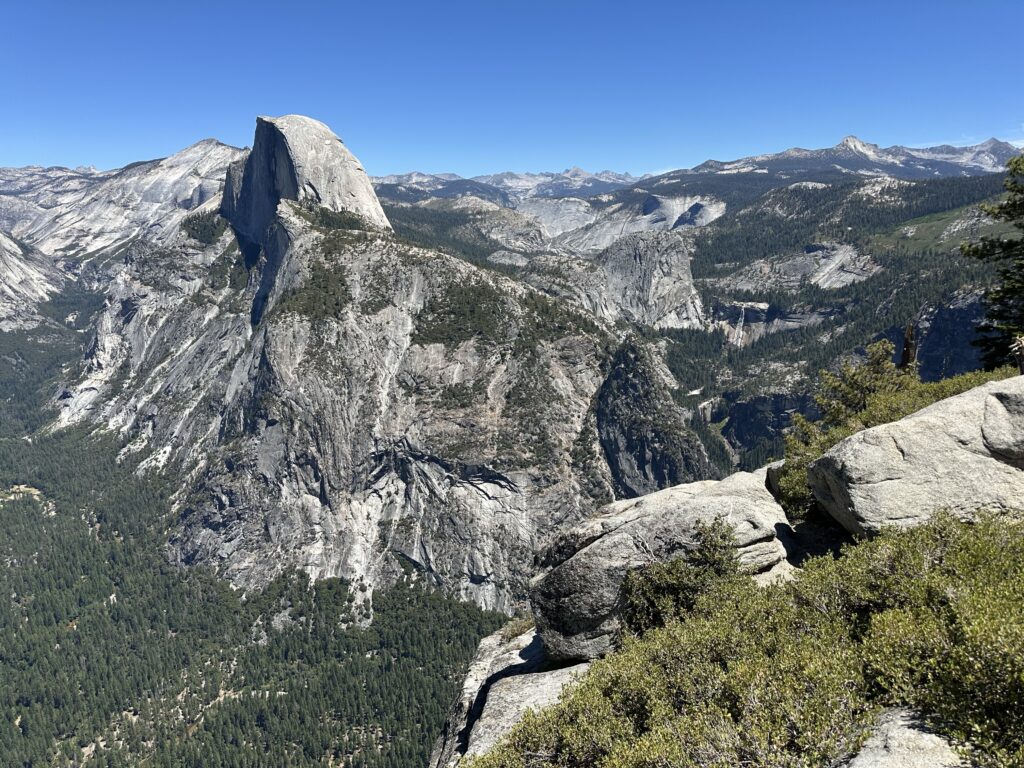
If you plan well, you can see towering waterfalls, the massive granite cliffs like El Capitan and Half Dome, and those giant sequoia trees without spending half your day in the car. And you can see all of that without hiking tons of miles if you don’t want to hike.
Yes, crowds are real during peak season, but there are strategies for avoiding some of them. Everyone likes to do different things, so I don’t think any generic itinerary you find online is going to be perfect for anyone. What you do also depends on the season, where you are staying, and how much you like to do in a day. But it’s all a starting point for you to launch your own research and plan your perfect trip.
So, here are three starting points with different itineraries:
- 2 Days: The valley highlights
- 3 Days: Add Tuolumne Meadows
- 5 Days: Add Sequoia/Kings Canyon
- And bonus suggestions if you have a full week to add wine country, Big Sur, or Lake Tahoe
Executive summary: What you need to know
If you are in a rush, here are the highlights.
- The park is huge: Yosemite covers 1,200 square miles with five main regions. Most first-time visitors focus on Yosemite Valley, Glacier Point, and Mariposa Grove.
- Driving takes longer than you think: It can take 1.5-2 hours to drive from Yosemite Valley to Tuolumne Meadows, and that’s without traffic or photo stops.
- No reservations required in 2026: Yosemite eliminated the summer vehicle reservation system for 2026, but parking still fills up by 8-9 AM in peak season. Arrive early or use shuttles.
- Waterfalls peak in late May/June: Snowmelt feeds the waterfalls, so they’re most impressive in late spring. By August, many are reduced to trickles.
- The high country closes in winter: Tioga Road and Glacier Point Road close with the first major snow (usually late October through May), eliminating access to Tuolumne Meadows and Glacier Point.
Tired of trying to figure it out by reading too many blogs?
Set up a free call with a national park expert for recommendations that are actually personalized for you!
The geography of Yosemite
To plan a smart trip, you need to understand the park’s layout. Yosemite has five main regions:
- Yosemite Valley: The park’s heart, home to Half Dome, El Capitan, Yosemite Falls, and most visitor services. This is where 90% of visitors spend their time.
- Glacier Point: High above the valley floor (3,200 feet up), offering panoramic views of Half Dome and the entire valley. Accessed via Glacier Point Road from spring through fall.
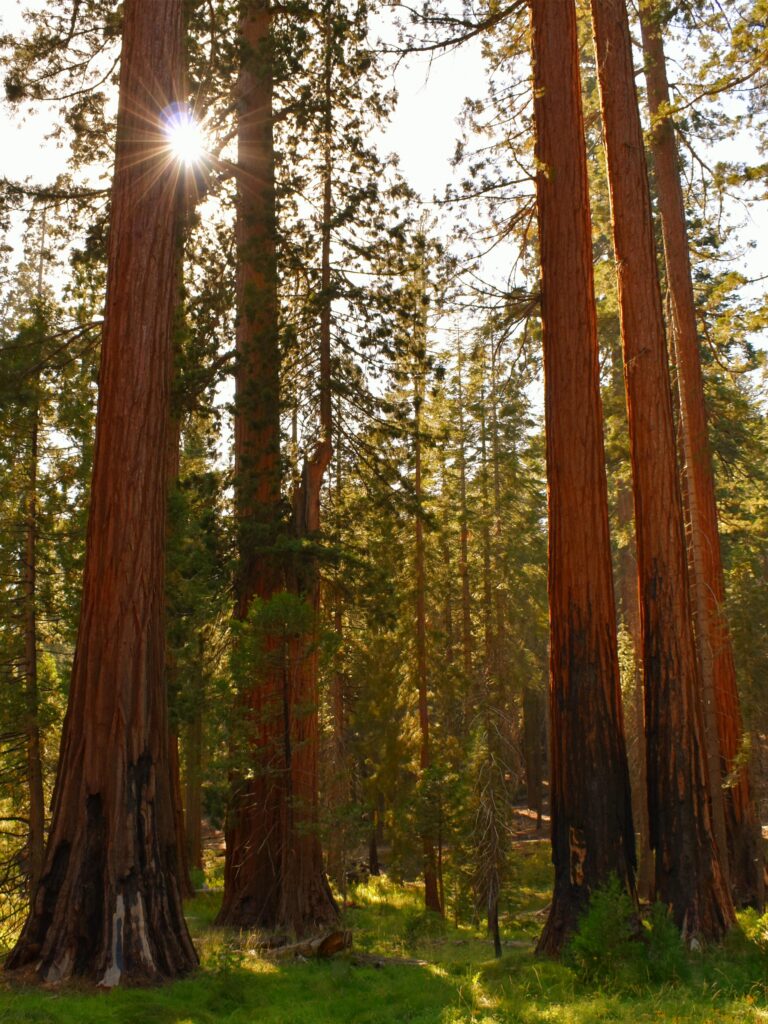
- Mariposa Grove: The largest grove of giant sequoias in the park, with over 500 mature trees. Located near the south entrance at Wawona.
- Tuolumne Meadows: High-altitude alpine meadows and lakes at 8,600 feet elevation. Only accessible late June through October via Tioga Road.
- Hetch Hetchy: A less-visited valley in the northwest with dramatic waterfalls and a reservoir. The quiet corner of Yosemite.
The 2-day Yosemite itinerary
This plan covers Yosemite’s most iconic sights for first-time visitors who want to see the essentials without rushing through absolutely everything.
Day 1: Yosemite Valley
Explore the park’s most famous valley and its world-class waterfalls. If you are visiting towards the end of the summer, the waterfalls will be less impressive, so you may want to substitute something from one of the longer itineraries.
Morning: Start at Tunnel View, the classic viewpoint where you see El Capitan, Half Dome, and Bridalveil Fall all at once. This is the shot that made Yosemite famous.
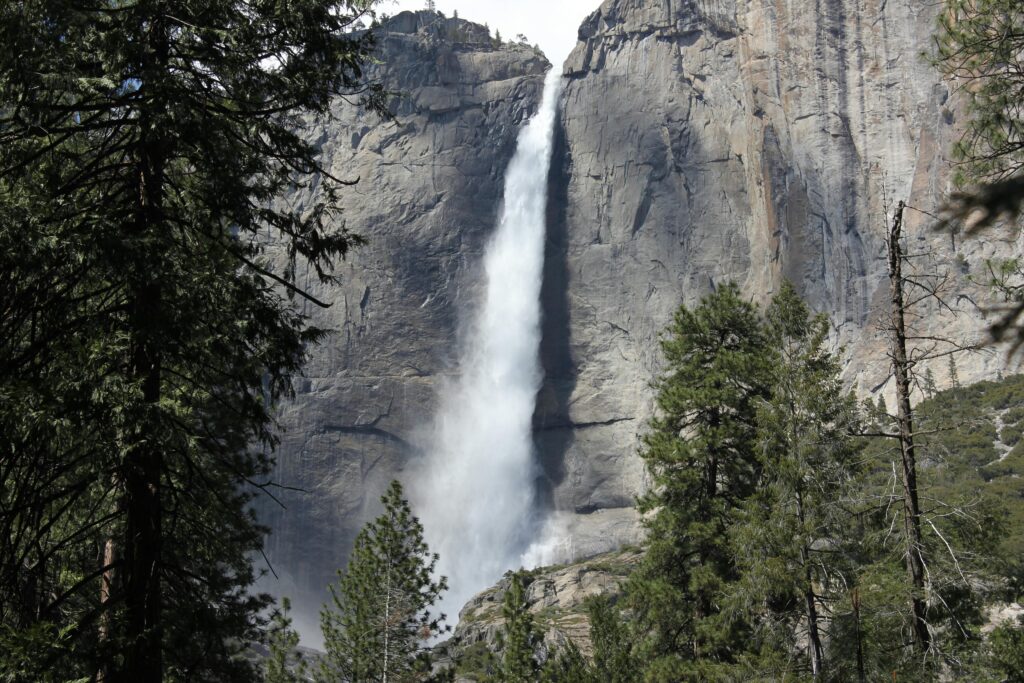
Mid-Morning: Drive or take the free valley shuttle to the Lower Yosemite Falls trailhead (stop #6). This easy 1.2-mile paved loop gets you to the base of North America’s tallest waterfall at 2,425 feet. In May and June, with peak snowmelt, the mist will soak you.

Afternoon: Hike the Mist Trail to Vernal Falls (5.4 miles round trip) if your group can handle moderate hills and 1,000 feet of elevation gain. It’s steep, but in peak waterfall time, you can get very close to the thunderous waterfall, and you will get wet from the spray. If that sounds too ambitious, do the shorter hike to the Vernal Falls footbridge (2.2 miles round trip, easy) for great views without the climb.
A few alternatives in the Valley because with only 2-days you need to make some choices. You can swim or rent tubes from Curry Village to float down the Merced River. Or hike or bike the Mirror Lake Loop (5 miles round trip, mostly flat). But, Mirror Lake can be completely dry in the summer, so check with a ranger first.
Evening: Grab dinner in Yosemite Village or at your lodging. Drive or shuttle back to Tunnel View for sunset if you have energy to see the spectacular golden light on Half Dome.
Day 2: Glacier Point and Mariposa Grove
This is the day for jaw-dropping views and giant trees.
Morning: Drive the 16-mile Glacier Point Road to its end at Glacier Point overlook. The drive takes about an hour from the valley. Stand 3,200 feet directly above the valley floor and take in panoramic views of Half Dome, Yosemite Falls, Nevada Fall, and the entire High Sierra. This is the best viewpoint in the park, hands down.
Mid-Morning: On your way back down Glacier Point Road, stop at the Sentinel Dome trailhead. This is my absolute favorite short hike in the park for the best views. The 2.2-mile round-trip hike to the top of the dome is easy to moderate with a 400-foot climb. From the summit at 8,127 feet, you get 360-degree views and a different perspective on Half Dome.
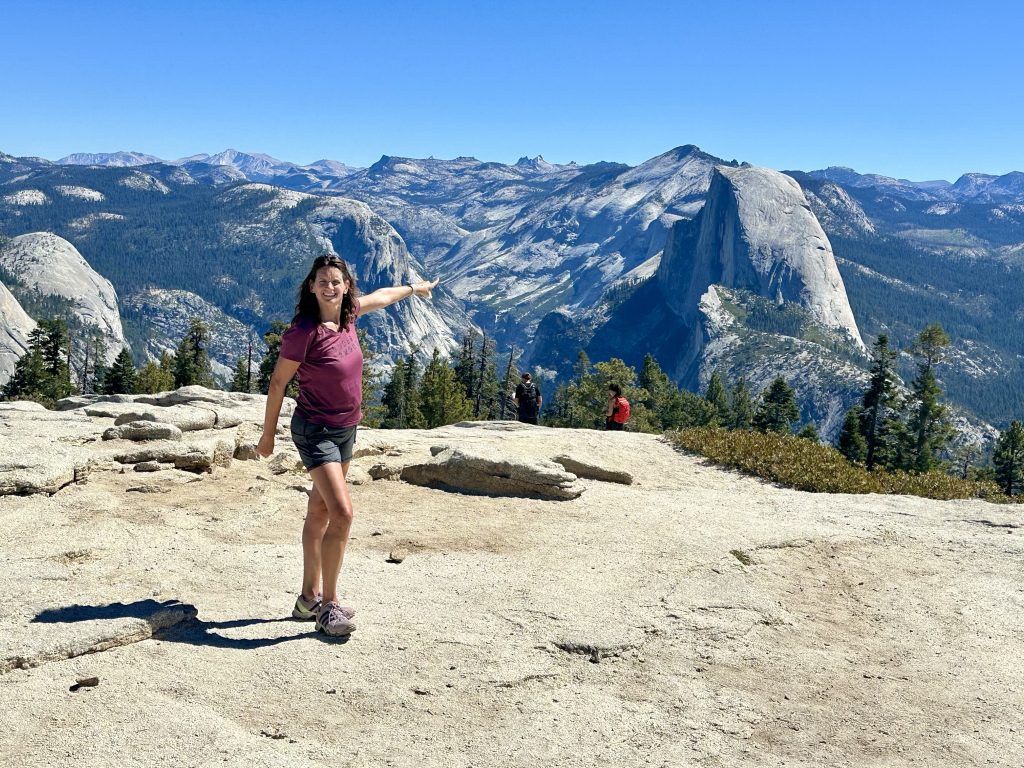
Afternoon: Drive to the south entrance (about 1 hour from Glacier Point) and take the free shuttle to Mariposa Grove. Walk the 2-mile Grizzly Giant Loop to see some of the world’s largest trees, including the Grizzly Giant (one of the 25 largest sequoias by volume) and the California Tunnel Tree.
The 3-day Yosemite itinerary
Day 1 and 2 Itinerary
My recommendation for the 3-day itinerary is to follow the 2-day Yosemite itinerary and add a 3rd day to enjoy the beauty of Tenaya Lake and the northern part of the park.
Day 3: Drive Tioga Road to Tuolumne
Tioga Road is only open from roughly late June through October. From Yosemite Valley, the 55-mile drive to Tuolumne Meadows takes about 1.5 hours without stops, but there’s plenty to stop for along the way.
Stop 1: Olmsted Point (mile marker 30). This pull-off gives you a unique view of the back side of Half Dome across a massive glacially-polished granite slab. With binoculars, you can see the hardcore hikers climbing up Half Dome.
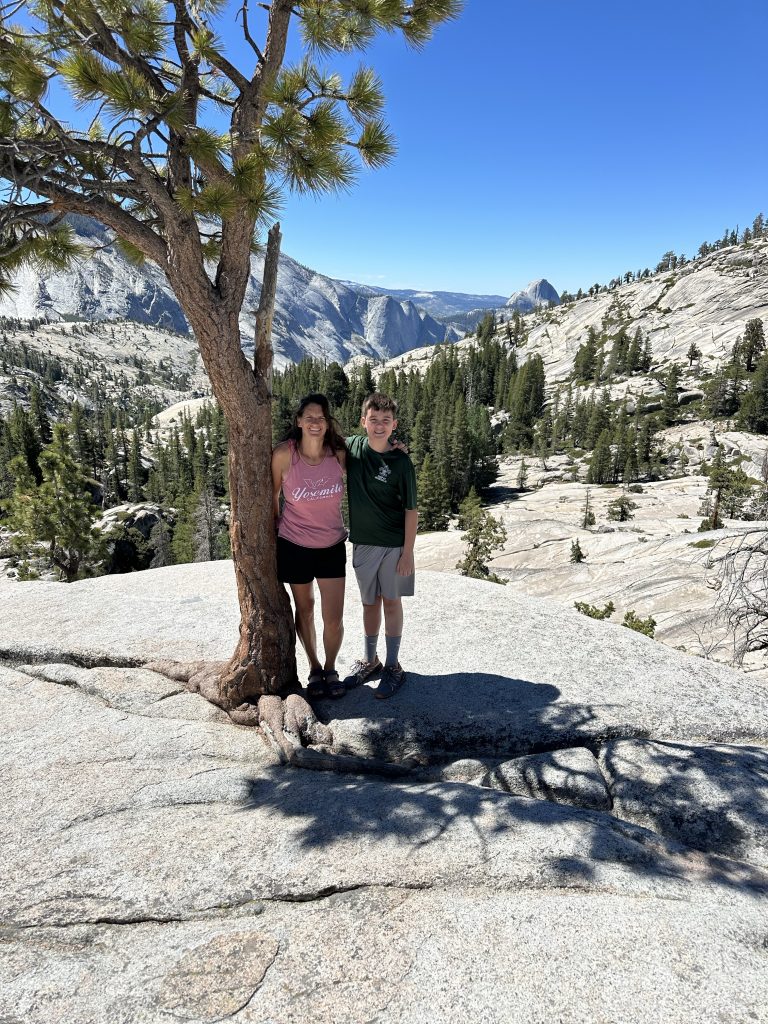
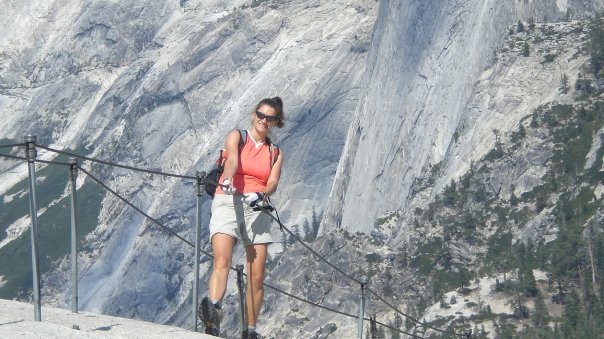
Stop 2: Tenaya Lake (mile marker 32). This stunning alpine lake at 8,150 feet has a sandy beach perfect for a picnic or quick swim (the water is freezing even in July). Pro-tip: Buy some inflatable tubes or even ship them to your hotel from Amazon in advance. It’s much easier to enjoy the cold water from a tube!
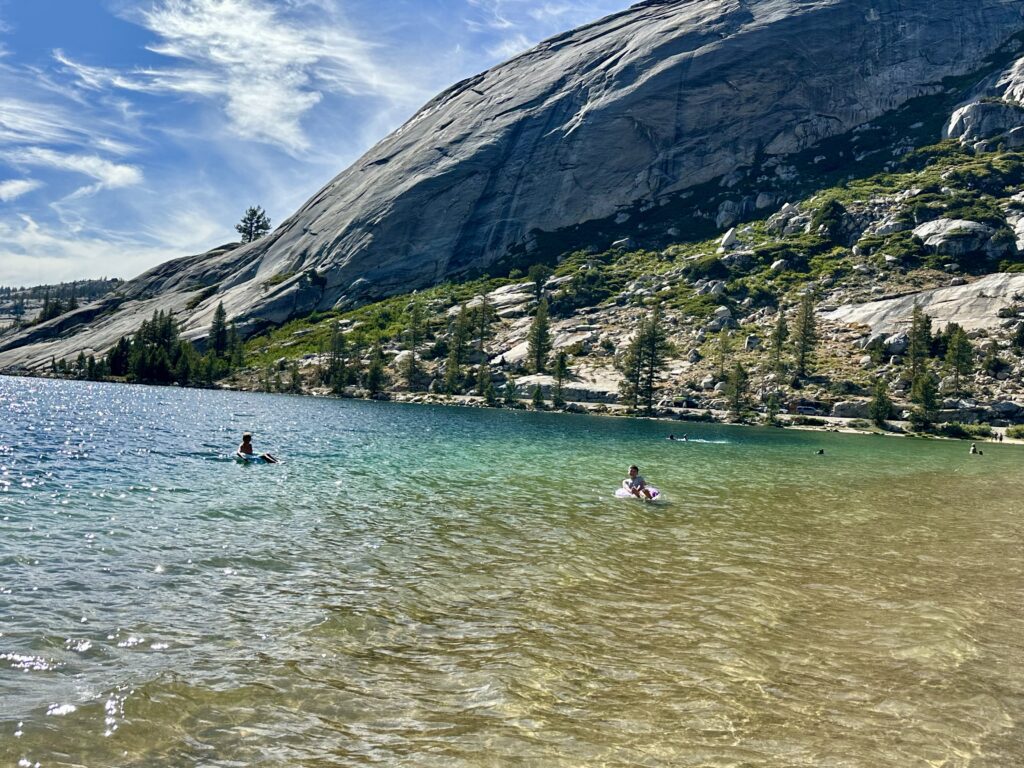
Tuolumne Meadows: Arrive at Tuolumne Meadows by early afternoon. This vast subalpine meadow sits at 8,600 feet and offers a completely different landscape than the valley. And it’s way less crowded than the valley.
The Hike: If your group can handle 7-10 miles, hike to Cathedral Lakes (7.6 miles round trip, 1,000 feet gain). Lower Cathedral Lake is absolutely stunning with Cathedral Peak reflected in turquoise water. If that’s too long, hike to Lembert Dome (2.8 miles round trip, 850 feet gain) for 360-degree views of the meadows.
The 5-day Yosemite itinerary
Day 1 – 3 Itinerary
With five days, you can slow down, do more hikes, or take a trip to Sequoia and Kings Canyon National Parks. Follow the 3-day itinerary and then choose an option for Day 4 – 5.
Day 4 -5 Option A: Slower Pace in the Valley and Add a Tour
Take the hikes that you didn’t hike because you had to make tough choices on the 2-day itinerary in the Valley. Relax and swim or float the Merced River through Yosemite Valley.
Add the Valley View Trail from El Capitan Meadow to Valley View (2.3 miles one way, easy and flat). This is one of the best valley walks that most people skip. You will have the trail mostly to yourself.
Visit the Ansel Adams Gallery in Yosemite Village.
Go to the Yosemite Valley activities center to rent bikes, take a guided bus or tram tour,
Splurge on dinner at the Ahwahnee Dining Room for a special final night (reservations required and dress code enforced—collared shirts, no athletic wear).
Day 4 -5: Option B Add Sequoia and Kings Canyon
If you want to see more giant trees and different scenery, head south to Sequoia and Kings Canyon National Parks (about 3.5 hours from Yosemite Valley).
Day 4: Drive to Sequoia/Kings Canyon
Morning: Leave Yosemite by 8 AM for the 3.5-hour drive to Sequoia/Kings Canyon (via Fresno on CA-41 and CA-180).
Afternoon: Enter Kings Canyon National Park and drive the spectacular Kings Canyon Scenic Byway to Cedar Grove. The road descends 4,000 feet into one of America’s deepest canyons. Stop at Junction View to see the confluence of the Middle and South Forks of the Kings River.
Late Afternoon: Hike the Zumwalt Meadow Loop (1.5 miles, easy) along the Kings River with massive granite walls rising on both sides. If you have more energy, add the Mist Falls trail (8 miles round trip, moderate).
Evening: Drive to your hotel in Three Rivers or Lodgepole (lodging options are limited so book ahead).
Day 5: General Sherman and Moro Rock
Morning: Enter Sequoia National Park and visit the General Sherman Tree, the world’s largest tree by volume. The easy 1-mile loop trail takes you to this 275-foot-tall, 36-foot-diameter giant sequoia that’s over 2,000 years old.
Mid-Morning: Hike the Congress Trail (2.5 miles, easy) to see dozens more massive sequoias, including the President, Senate Group, and House Group.
Afternoon: Drive to Moro Rock and climb the 400 granite steps to the summit for panoramic views of the Great Western Divide. The hike is short (0.5 miles round trip) but steep and worth every step.
Late Afternoon: Begin the 3.5-hour drive back to Yosemite (or continue south if leaving California).
More than 5 days? Beyond Yosemite
With a full week, you can experience Yosemite’s highlights and explore one of California’s other incredible destinations. There’s so much to choose from, but my top picks (and I’ve done all of these in combination with Yosemite) are Lake Tahoe, Napa Valley, and Big Sur.
Lake Tahoe
Lake Tahoe is about 2.5-3 hours north of Yosemite via Tioga Road (summer only) or 4 hours via CA-120 and US-395 (year-round).
Highlights
- Take the Heavenly Gondola to the observation deck at 9,123 feet for views of the entire lake (truly stunning).
- Drive to Emerald Bay State Park and hike down to Vikingsholm Castle (1 mile each way). This Scandinavian-style mansion from 1929 sits on the shore of the most photographed spot at Lake Tahoe. Remember, the hike back is ALL uphill.
- Rent kayaks at Sand Harbor on the east shore and paddle the crystal-clear waters. The water is so clear you can see 30-40 feet down. The boulder-lined coves are perfect for exploring.
- Relax at Kings Beach on the north shore or D.L. Bliss State Park on the west shore.
Napa Valley
Napa is about 3 hours west of Yosemite via CA-120 and I-580, making it a perfect final stop for wine and fine dining.
Day 6: Yosemite to Napa
- Explore the town of Sonoma, including the historic plaza and the wine bars, of course.
- Visit 1-2 wineries for afternoon tastings. Recommendations: Domaine Carneros (sparkling wine with views), Castello di Amorosa (Tuscan castle winery), or Opus One (high-end Bordeaux-style reds).
- Hire a driver or join a small-group wine tour so you avoid drinking and driving. Napa is famous for Cabernet Sauvignon, Chardonnay, and sparkling wines.
- Sterling Vineyards (aerial tram to hilltop tasting room), Inglenook (historic estate founded by Gustave Niebaum), V. Sattui (picnic grounds and deli).
- Lunch at Oxbow Public Market in downtown Napa for oysters, charcuterie, and local produce.
- Spa treatments at one of Napa’s luxury spas (Calistoga has natural hot springs) or explore the cute town of St. Helena for shopping.
Big Sur
Big Sur’s dramatic coastal cliffs are about 4 hours from Yosemite via CA-140 and CA-1, offering a completely different landscape to end your trip.
Highlights
- Drive Highway 1 south into Big Sur, one of America’s most scenic coastal drives. Stop at Bixby Bridge for the iconic view, then continue to Pfeiffer Beach.
- There are tons of amazing state parks in Big Sur, but my favorite (and the most convenient to Monterey, where I’d recommend staying) is Point Lobos State Park. It’s called “the crown jewel of the California State Park System” for a reason. You can’t go wrong with any hike here, and you can hike along the coastline as little or as much as you want. Parking fills up early, but there is street parking (which adds to your walking time).
- Explore the town of Monterey, including the world-famous aquarium, although my personal hot-take is to skip the aquarium (keep reading to see why!)
- My absolute favorite hidden gem is kayaking with the sea otters. It’s seriously one of the coolest things I’ve done to just see the adorable otters popping up next to your kayak. It’s cheaper than the aquarium, and you don’t even need advance reservations! Pro-tip: Go in the morning. The water is much calmer, and kayaking in the wind is tough!
Where to Stay
Choosing where to stay will make a big difference in how much you can see and how much you will drive. Your best options depend on how far in advance you plan and your budget.
Inside Yosemite Valley
Staying in the valley puts you steps from iconic views and trails, but it can book up 12-13 months in advance in peak season as soon as reservations open.
- The Ahwahnee: Yosemite’s most famous lodge with stunning Great Lounge, fine dining, and rooms starting at $600+/night in peak season. Worth it for a special occasion.
- Yosemite Valley Lodge: Modern hotel near Yosemite Falls with rooms around $300-400/night. Amazing location, comfortable, outdoor pool.
- Curry Village: Canvas tent cabins ($150+) or a small number of heated wooden cabins ($200+). Cheaper option with communal bathrooms for tent cabins. Great for families who love camping.
Gateway Towns
If park lodging is full, these towns offer better availability:
- El Portal (25 minutes from the valley): Yosemite View Lodge, Cedar Lodge are the closest options to the valley with easier last-minute booking. Rates vary dramatically by season.
- Mariposa (1 hour from the valley): Larger selection of hotels and vacation rentals, with some more reasonable options like the Best Western Plus and budget (by Yosemite standards) options like the Mariposa Lodge, but further from the park. Good restaurants and grocery stores.
- Fish Camp/Oakhurst (Close to south entrance and sequoias, 1 – 1.5 hours from valley): Fish Camp has the higher-end, 4-star, highly-rated Tenaya at Yosemite with resort amenities, and Oakhurst, a bit further out, has some less expensive but highly rated options like the Best Western Plus Yosemite Gateway Inn and Yosemite Southgate Hotel.
Pro tip: For the best prices and selection, book 6- 9 months in advance. And book refundable options on Hotels.com in case your plans change or you find a last-minute cancellation at an in-park option.
Common Mistakes to Avoid
1. Arriving Mid-Morning in Summer. Parking lots in Yosemite Valley fill by 8-9 AM from June through August. If you arrive at 11 AM, plan to park at Curry Village Day-Use Lot and take the free shuttle to get around the park. Or just get there before 8 AM.
2. Visiting in Late Summer for Waterfalls. Yosemite Falls, Bridalveil Fall, and Vernal Fall are most impressive in May and June when snowmelt is high. By August, Yosemite Falls is often a trickle or completely dry. If waterfalls are your priority, visit in late May or early June.
3. Underestimating Driving Distances. The drive from Yosemite Valley to Tuolumne Meadows is 55 miles but takes 1.5 hours without stops. The drive to Mariposa Grove is 1 hour each way. Budget more time than Google Maps suggests because you will stop for views and may hit traffic or have to wait for parking.
4. Skipping Glacier Point. People tend to spend most of their time in the valley and skip the 1-hour drive to Glacier Point. This is one of the most iconic views in Glacier that you don’t want to miss. The view from 3,200 feet above the valley is worth the drive and crowds.
5. Not Checking Tioga Road Status. If you are planning to visit Tuolumne Meadows or drive to Lake Tahoe via Tioga Road, verify it’s open before you go. The road typically opens in late June and closes in late October, but early/late snowstorms change this. Check nps.gov/yose for current road conditions.
6. Forgetting Layers. Yosemite Valley can be 85°F while Glacier Point is 65°F and Tuolumne Meadows is 55°F—all on the same day. Bring a jacket, hat, and long pants even in July.
Best Time to Visit
Yosemite is spectacular year-round, but the best time depends on what you want.
May-June: Peak waterfall season with Yosemite Falls, Bridalveil, and others at full force. Wildflowers bloom in the meadows. Tioga Road opens late May or June. Crowds are building, but far from peak. This is what I would recommend if it works with your schedule. Temperature range: 50-75°F.
July-August: Peak summer with all roads open and the warmest weather. Hotels book up quickly and are the most expensive. Parking lots fill up early, and trails are crowded. But the weather is guaranteed, and all facilities are open. Temperature range: 60-85°F in the valley, cooler at elevation.
September-October: Shoulder season with smaller crowds, fall colors, and pleasant weather. Most waterfalls are dry or weak. Tioga Road closes in late October with the first major snow. This is the second-best time to visit. Temperature range: 50-75°F.
November-April: Winter transforms Yosemite into a quiet, snowy wonderland. Glacier Point Road and Tioga Road are closed. Valley waterfalls are weak or frozen. But you can snowshoe, cross-country ski, and see Half Dome dusted with snow. Temperature range: 30-55°F.
FAQ: Questions I Get Asked a Lot
Is Yosemite good for kids?
Yes! There are easy paved trails to Lower Yosemite Falls and Bridalveil Fall, Junior Ranger programs, swimming or tube floating in the Merced River (summer), and the Mirror Lake Loop is perfect for families.
Do I need reservations to enter Yosemite?
As of 2026, no vehicle reservations are required to enter the park (a change from 2025). You just pay the $35 entrance fee or use your America the Beautiful Pass. However, parking still fills early, and there could be lines to get into the park, especially on weekends in peak season. Arrive before 8 AM in summer, or consider using YARTS to get into Yosemite if you are staying in a gateway town, and then use the free park shuttle system in the park.
How many days do I need?
I recommend at least 3 days for first-time visitors. Two days will feel rushed. Five days lets you see the high country or add Sequoia/Kings Canyon. A week allows you to combine Yosemite with Lake Tahoe, Napa, or Big Sur.
Can I bring my dog?
Dogs are only allowed on paved trails (valley floor, Yosemite Village) and in developed areas. They cannot go on dirt hiking trails, in the wilderness, or inside most buildings. Honestly, Yosemite is not a great park for dogs, so if you can make alternative plans for your dog, I would.
What’s better—Yosemite or Sequoia/Kings Canyon?
They are different experiences. Yosemite has more iconic landmarks (Half Dome, El Capitan, Yosemite Falls), bigger crowds, and better visitor services. Sequoia/Kings Canyon has the world’s largest trees, deeper canyons, fewer crowds, and more remote wilderness. Do both if you have time.
Stop Researching and Start Dreaming
Planning Yosemite can feel like a full-time job. Where to stay, which hikes to prioritize, how to avoid the worst crowds, whether to add Sequoia/Kings Canyon, Lake Tahoe, or wine country. It’s a lot to juggle while scrolling through 47 travel blogs.
I can build a custom plan for your family that considers your lodging location, fitness levels, interests, and exact dates. I will figure out parking strategies, shuttle systems, and restaurant reservations so you don’t spend your vacation stressing about logistics.
Let’s plan your trip
Set up a free consultation or tell us about your trip to get a quote.
This post contains affiliate links. If you click a link, I may earn a small commission—at no extra cost to you.