Grand Canyon National Park

Why you’ll love the Grand Canyon

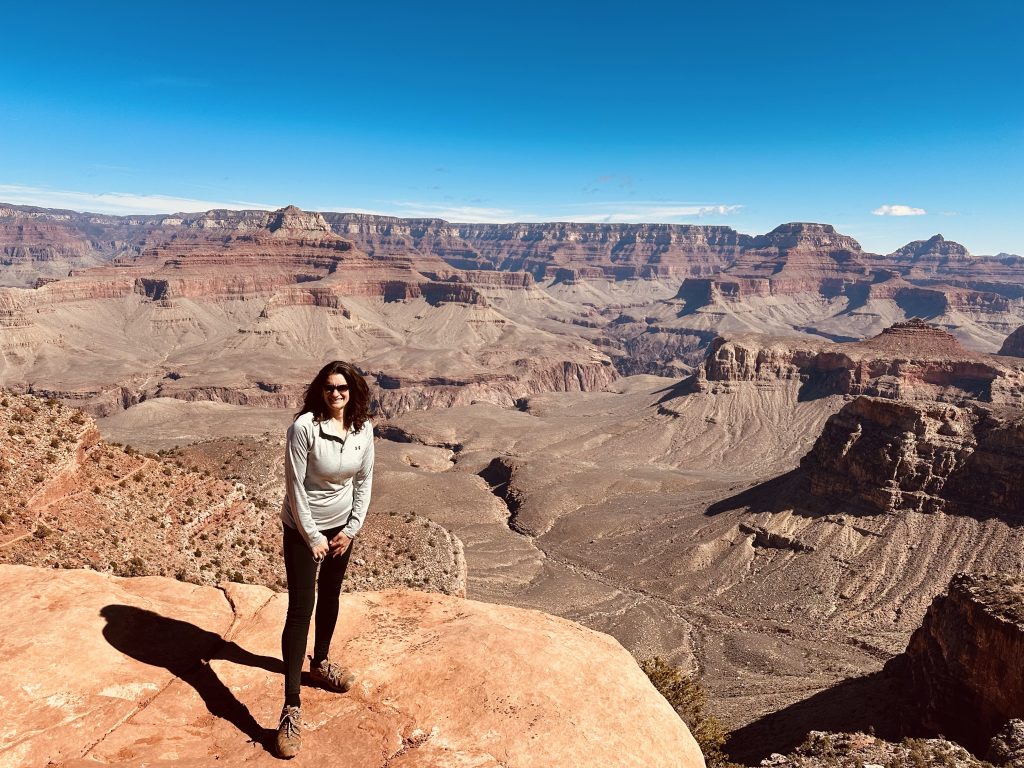
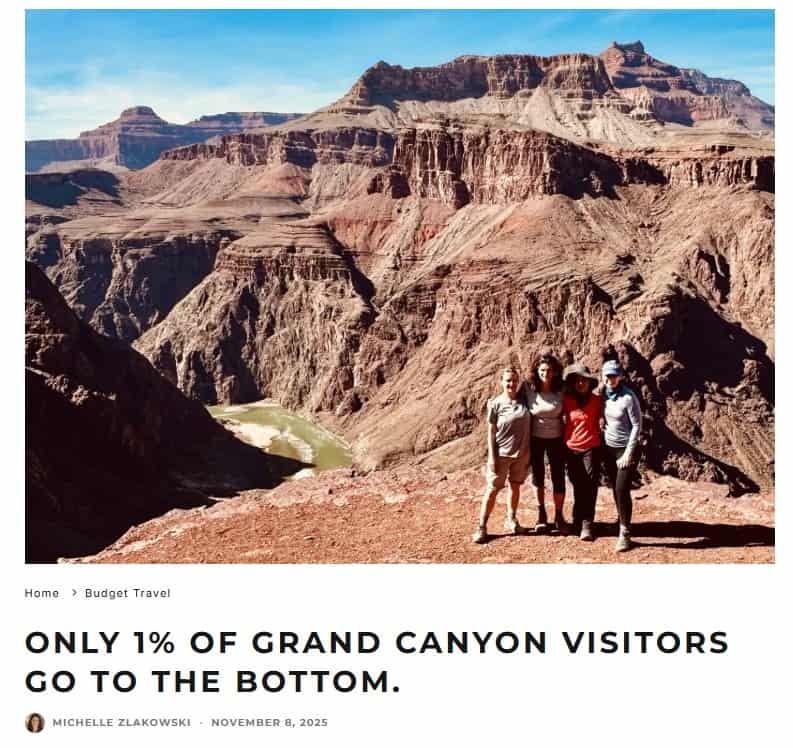
The Grand Canyon is famous for a reason. Pictures don’t do the sheer size and color justice. I was fortunate enough to hike to the bottom and stay at Phantom Ranch, but there are endless ways to soak in the views without trekking.

Walk over the edge of the canyon on the Skywalk, soar overhead in a helicopter, or simply stand at an overlook.
Hiking the Grand Canyon

Beyond hiking…

  • Grand Canyon Skywalk
  • Mule rides
  • Helicopter and airplane tours
  • Jeep or hummer tours
  • Audio driving tours
  • Grand Canyon Railway
  • Grand Canyon IMAX experience
  • Bike riding
AS FEATURED IN THRIFTY NOMADS

Hiking the Grand Canyon

Our epic Grand Canyon adventure was featured in Thrifty Nomads


Frequently Asked Questions

2-3 days is ideal for exploring the South Rim’s highlights, which include visiting key viewpoints along the Rim Trail, hiking partway down the South Kaibab or Bright Angel Trail, catching sunrise and sunset, and exploring Desert View Drive. With 3 days, you can add a helicopter tour, a ranger-led program, or a more ambitious hike. One day allows you to see major viewpoints and do a short hike, but you’ll miss the magic of experiencing the canyon at different times of day. If you want to visit both the South and North Rims or add rafting, plan for 4-5 days total.

The South Rim is most accessible year-round, with the best infrastructure (lodges, restaurants, visitor centers), and is where 90% of visitors go. It’s open 365 days and offers the most developed trails and viewpoints. The North Rim is quieter, cooler (1,000 feet higher elevation), and more remote, but only open May through mid-October. It offers a completely different perspective with fewer crowds. The West Rim (where the Skywalk is located) is on Hualapai tribal land, separate from the national park, and mainly visited as a day trip from Las Vegas. For first-time visitors, I’d strongly recommend the South Rim.

People do it, but the National Park Service strongly discourages hiking to the river and back in one day. You need to be a very experienced hiker and prepared for the heat. It’s 10 miles each way with nearly 5,000 feet of elevation change. Summer temperatures at the bottom exceed 110°F, and countless hikers require rescue every year attempting this. If you want to reach the bottom, plan an overnight stay at Phantom Ranch (book 15 months ahead via lottery) or at a backcountry campsite (permit required). A rim-to-rim hike is possible for very fit hikers as a 2-day trip with shuttle logistics. For day hikes, turn around at designated rest houses rather than attempting to reach the Colorado River.

Hands down, spring and fall. April-May and September-October offer the best combination of mild weather and manageable crowds. Spring brings wildflowers and comfortable temperatures (60-70°F at the rim), while fall offers stunning light and cooler hiking conditions. Summer (June-August) is very hot (100-110 F+) and extremely crowded at the rim, with parking lots full by 9 AM. Winter (December-February) provides solitude and beautiful snow-covered vistas, though some facilities close and roads may be impassable after storms. Sunrise and sunset are spectacular year-round and worth planning your day around.

No vehicle reservation or timed entry is required to enter Grand Canyon National Park, but you do need to pay the entrance fee ($35 per vehicle, valid for 7 days). However, other reservations are essential: lodging at El Tovar inside the park books early, popular backcountry camping permits are available 4 months ahead, and Phantom Ranch lodging (at the bottom) operates on a lottery system 15 months in advance. Mule trips and river rafting also require advance booking.

You can certainly see highlights in one day. Drive or shuttle to key viewpoints like Mather Point, Yavapai Point, and Yaki Point, walk a section of the Rim Trail, and perhaps hike a mile down the South Kaibab Trail. Two to three days allows you to experience the canyon at different times of day, explore multiple viewpoints, take a longer hike, and actually relax and absorb the enormity of what you’re seeing.